Listening to Hear
Our current financial system is a machine where the gatekeepers are those who have accumulated the wealth that keeps the machine running and the machine is failing! There is a different option if we're listening.

The microphone squealed, feedback, sharp and harsh, a quick adjustment before settling into a low hum that felt like a warning. Mara stood at the front of the community hall, palms damp against her note cards, the projector bathing the wall in clean blue light:
THE CARE GRID — A NEW SAFETY NET FOR OUR TOWN
Behind her, the care circle formed a quiet line: Dev with the demo ready, Amina steady as a clinician, Tomas strong, like a door-frame, June with her teacher’s calm presence, and Lark, silent, watchful, holding the edge of the room like a smoke detector.
They hadn’t come together to be heroes. They’d formed after a winter storm, seeing the headline “Two Elders Die After Losing Heat.” Alone in an old building where nobody noticed the heat had failed. “Never again,” June had said back then, heart breaking, voice shaking. “Never again,” they echoed, earnest, terrified, determined.
 So they did what capable people do when the world feels like it’s failing: they build. First a whiteboard in Mara’s kitchen. Then shared docs, late-night calls, sticky notes like prayer flags. They spoke in systems language; coordination, networks, leverage points, because the problems they were staring at were massive: housing, food access, elder care, the unnamed violence of being unseen.
Now they were unveiling their answer. Mara spoke into the mic. The Care Grid, she explained, would connect volunteers, service providers, and at-risk residents in real time, Uber for needs! Dev started the demo; the map on the screen looked beautiful: neat icons, smooth routes, help dispatched like light. The room leaned in. Council members nodded. Someone filmed from the back like this was history. Mara felt her chest loosen. It was working. Their big idea was landing.
A woman in the third row stood, rising slowly, feeling anxious, knowing what standing could cost her. “My name is Maria,” she said. Hispanic descent, voice quiet but steady. Her phone was in her hand, screen dark. “I live on Harbor Street. In the blue building with the broken elevator.”
Mara smiled the way you smile when you want to welcome someone without losing momentum. “Thank you for coming. What can we answer?”


















 Maria looked at her screen, then at the stage. “I tried your pilot,” she said.
Dev brightened, already moving toward metrics. Maria lifted her hand, not rude, just firm. Anticipating what would come next.
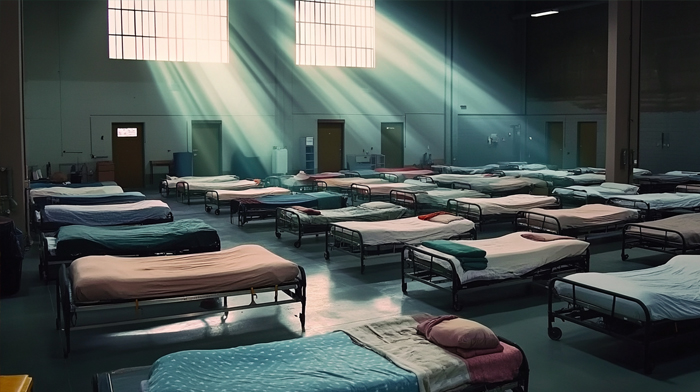
“I asked for help carrying groceries up four flights,” she continued. “My grandmother is eighty-one. Her knees are bad. The app said my address couldn’t be verified. Then it said my building was outside the service zone.” At that moment, the air shifted. Maria swallowed the guilt she was feeling; “I had to go to work. I left my grandmother without food, without medicine.”
Maria went on, quieter now, but with a heat underneath. “Two months ago, I came to your meeting. I said some of us cannot use apps. Some of us do not feel safe putting our names into systems. Some of us live on the edge of paperwork.” Mara remembered Maria, near the door, clutching a folded grocery list like it was her life savings. She remembered nodding, meaning kindness, and moved on; not hearing the need.
Maria’s eyes stayed on Mara. “You said you would circle back.” A hush so complete the room felt suspended. Mara’s mouth went dry, the projector fan suddenly sounding loud, mechanical, indifferent. Maria’s voice didn’t rise, it didn’t need to; “So who is this Care Grid for?”
In the front row, a councilwoman cleared her throat, ready to smooth it over, to spin it. But Mara felt the impact, the script didn’t matter anymore. She could only see a grandmother four flights up, hungry, waiting in a cold building for a system that hadn’t bothered to include her.
 Mara stepped away from the podium. Looking Maria in the eye saying “We missed you.” The words tasted like metal. “And that’s on us.” Maria nodded, as if she’d expected nothing, acknowledging the simple truth. She sat down quietly. The meeting stumbled forward, but the applause at the end fell flat; like champagne in a bottle left open too long.
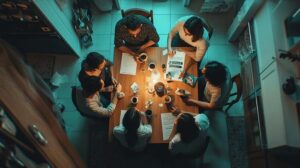
Outside, the night wind lifted scraps of paper, spinning them across the parking lot like small ghosts. They drove back to Mara’s house, the silence heavy in the car. In her kitchen, the table was covered with branded wristbands that said CARE CREW in bold letters. Flyers, sticky notes, a stack of laminated “impact” dashboards. No one touched them.
Dev started pacing. “We can fix the address verification. It’s probably a…”
“Stop,” June said softly. Dev froze. “That wasn’t a bug, that was a blind spot.”
Amina rubbed her temples. “We built for people like us,” she said. “Phones that work. Time to troubleshoot. Trust in systems. Safety in forms.”
Tomas exhaled hard. “We built a bridge for the people already standing on the right side, missing those on the other side of the chasm.”
Mara felt shame climb her spine, hot, humiliating. She wanted to defend: the grant deadline, the urgency, the good intentions. But the truth was sitting at their table with them, heavy and undeniable: They had started too big. Too fast. Too abstract.
Lark reached into their bag and dropped a worn binder on the table like a stone. THE CODE OF CONTRIBUTION, hand-written on the cover. They’d adopted it early; values, guardrails and actions meant to keep their work human. They’d read it aloud once, solemn like a vow. Then got busy, chasing the big solution, treating the Codex like a decoration. Lark opened it to a page and slid it toward Mara without a word. Mara stared at it.
 June picked it up, read aloud, slow and steady: “Practice openness. Share concerns early. Ask questions.”
Flipping the page: “Be your word. Take responsibility. Forgive fast.”
Another: “Sufficiency over scale. People and planet before performance metrics.”
Mara blinked hard. The words weren’t new, but tonight they landed as consequences.
Tomas pointed to a line with a blunt finger. “That one,” he said.
June read: “Include the outliers, the edges are where needs come to life and the system speaks.” Silence as they let it sink in.
Mara whispered, almost to herself, “What problem are we really trying to solve? Is it our need or is it theirs?”
Amina answered gently. “We told ourselves we were solving elder care at scale. Maria showed us the real problem: people are trapped; by stairs, by bureaucracy, by fear, by invisibility.”
June nodded. “We started with what made a splash, made us look impressive.”
Dev stopped pacing. His face had changed; less confident, more grief. “We were trying to help,” he said timidly.
“I know,” Mara said. And something inside her shifted; not away from accountability, but towards it. “Intent doesn’t protect people, doesn’t meet needs, practice does.” A clean anger rose in her; not performative, not reckless. Protective. The kind that shows up when love finally refuses to be polite. “Okay,” Mara said, standing. “We do this again. But smaller, human scale, making it personal. Tonight.”
Dev blinked. “Tonight?”
“Tonight,” Mara repeated. “Before we fix the ‘system,’ we repair what we broke, trust.”
They pulled the Codex to the center of the table like the compass it was meant to be. No grand plan. No pitch deck. No shiny interface. Just the next right step. They wrote it down in thick marker:
One line at the top of the page, underlined twice: OUTLIERS FIRST.
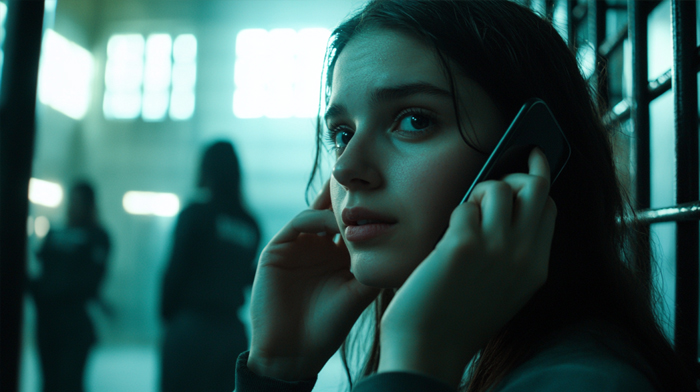
Amina picked up the phone and called Maria. Put her on speaker. Not recognizing the number, Maria answered cautiously. “Hello?”
Mara took a breath and let it land in her body before speaking. No rushing. No smoothing. “It’s Mara, we failed you,” Mara said. “And we’re sorry, not sorry like a word, sorry like we’re changing.”
Silence, then Maria exhaled. “Okay.”
“We want to meet,” Mara continued. “Not to defend, not to ask you to educate us, to listen. And if you don’t want that, we respect it. But if you’re willing… we want to start on Harbor Street. With your grandmother. With stairs. With real needs.”
 Another pause, long enough for fear to enter the room. “My grandmother,” Maria finally said, voice softer, “she doesn’t trust meetings.”
Mara nodded even though Maria couldn’t see her. “Fair enough.”
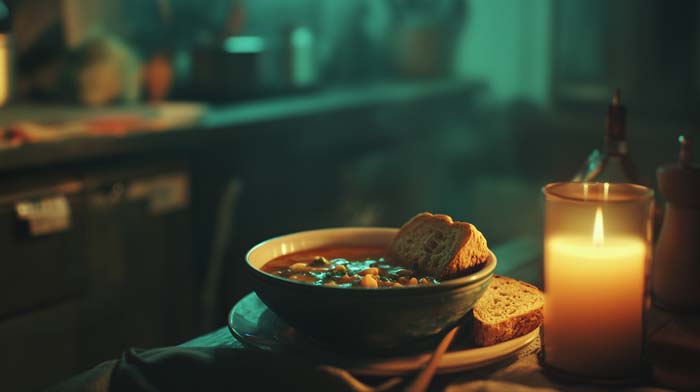
“But she trusts soup,” Maria added, surprising even herself.
Tomas chuckled once; quiet, relieved.
“We can do soup,” Mara said.
“And no cameras,” Maria said, firmer now.
Dev’s voice cracked slightly. “No cameras.”
“Sunday,” Maria said. “Two o’clock.”
When the call ended, the kitchen felt different. Not solved, not redeemed, clear, aligned. Lark closed the binder gently. “We don’t get to scale care,” she said. “We practice it, and if it grows, it grows because it’s alive.”
June nodded. “And we won’t skip the Codex again.” Mara looked at the cheerful CARE CREW wristbands and felt a tenderness for their earlier selves; earnest, overreaching, desperate to matter. She didn’t hate them, she had compassion, she also knew she couldn’t let them drive. The big problems are still here: housing, neglect, isolation, a city built like a machine and not a living system. But now they understood something simple and fierce:
The grand solution was a good problem to have…it would arrive when they were ready!.
First came the real work, stairs, hot soup and trust. Listen without agenda, repair without performance. Building care where people can actually feel it, touch it, experience it.
 That night, Mara stepped onto her porch. The winter air biting her cheeks. A car passed, headlights sweeping over bare trees. Same world. Fresh perspective. Clearer sight. She imagined Sunday: a broken elevator, four flights of stairs and a bowl of soup. At the top, a grandmother who had learned not to expect anyone. A knock on a door. Not an app. A human being, showing up…quietly, consistently…one person trusting…until a neighborhood could believe:
We see you. We are here. We’re meeting you where you are.