Listening to Hear
Our current financial system is a machine where the gatekeepers are those who have accumulated the wealth that keeps the machine running and the machine is failing! There is a different option if we're listening.

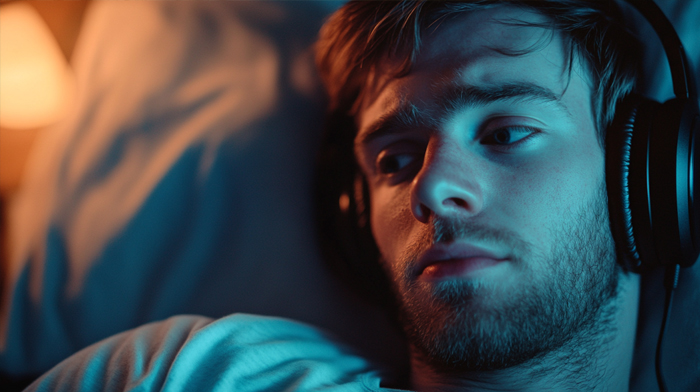
Evan liked the feeling of being part of something. That was the honest part, it wasn’t that he loved “content.” He loved the companionship of voices, calm, confident, endlessly articulate, walking beside him through the soft chaos of his life. The world was like a loud room where everyone talked at once and it was a challenge to follow any single conversation. Podcasts, at least, were focused, linear. Someone began a thought, strung together a series of sentences and finished it. He listened, the way people used to smoke.
Morning: earbuds in, coffee in hand, an “expert’s” voice laying out the day’s first tracks in his brain; economics, psychology, science, culture. The tone was always the same, measured, crisp, faintly amused at the messy world they were diagnosing. The certainty that felt like a shelter.
 Commute: the next episode in the queue. Lunch: another episode from the queue. The gym: a debate, two intelligent people, disagreeing ferociously but somehow sounding above the fray. Evening dishes: a historian telling him what the present “really” meant. Late-night: scrolling through his queue, planning for the next day’s listening, and noticing something in his queue that he wanted to avoid!
Evan had his favorite voices, and felt shy admitting that, like it was too intimate to say, he preferred a disembodied stranger’s voice. Some hosts felt like older siblings, the ones who’d made it out. Others felt like the smart teacher, who saw you in the back row and didn’t let you disappear.
He knew the rituals of the pod world: the intro music,the guests’ powerful statement to capture your attention, the sponsor message delivered with ironic detachment, the pitch to subscribe or become a patreon, the ironic laugh implying “we’re friends here.” He knew the pleasure of the perfect dunk; the argument that landed cleanly, a statistic that sliced through nonsense, a quip that made you feel briefly superior to everyone who hadn’t heard it!
It felt like intelligence. It felt like orientation. It felt like belonging. What Evan didn’t notice, until he couldn’t avoid it anymore, how much of himself was quietly missing from his own life. Not in a dramatic way, not a crisis, more like a dimmer switch turned down so low that the light barely glowed. He still went to work, still answered texts, still laughed at the right moments, but something inside him had gotten… outsourced.
He realized he didn’t just listen, he deferred his discernment to people with a better vocabulary, his trust to people with better microphones, his sense of reality to those who sounded as if they’d already solved it. When something happened in the world, Evan’s first instinct wasn’t to feel it, it was to find an episode that would tell him what it meant.





















 This was the Pod Caste, not exactly a religion, but close. A new hierarchy of attention and authority, not enforced by some higher power or dogma, rather by habit. A priesthood made of experts, fluent, confident and clever, consecrated by likes and followers. The listening congregation, loyal and grateful, receiving the sermons of interpretation.
Evan didn’t think of it that way. He thought he was staying informed. He thought he was “doing the work.” He thought that if he kept listening, he would eventually become the kind of person who knew how to live. He didn’t know it yet, but the spell began to weaken.
It was nothing cinematic, no thunder and lightning, no booming voice or burning bush, no revelation. Just a weekday at the grocery store. Evan stood in the cereal aisle, scanning boxes, listening to a famous thinker explaining, calmly, compellingly, why modern people were losing their capacity to think. The irony was not lost on Evan, which made him smile: yes, I’m listening to a podcast about not listening to podcasts. Look at me he thought, becoming meta.
He reached for the granola he always bought. Then faintly, he heard a child crying at the end of the aisle, pulling his attention away. A small, exhausted sound. Evan’s body started to turn toward it. But suddenly the host’s voice swelled in his ears, an elegant point about attention economics, about the scarcity of focus, about how outrage hijacks the nervous system. Evan stayed facing the shelf. His hand paused mid reach. The child cried again.
Evan realized, with a small flash of embarrassment, he had stopped turning towards what was right in front of him because the sound in his ear was more compelling. He took the granola, walked to the checkout, and paid. As he walked home he was telling himself it was nothing, a glitch, a moment.
But the next day, it happened again, this time in the middle of a conversation.
His friend Mara was telling him about her divorce. She wasn’t asking for advice. She was being vulnerable, sharing how she was feeling, the pain, the confusion, the uncertainty. She only wanted a compassionate ear.
Evan listened the way he listened to a podcast, his head tilted slightly, attentive, nodding, murmuring affirmations, the way he imagined the presence of a podcaster. With Mara, he could feel his mind reaching for frameworks, attachment theory, trauma patterns or maybe the psychology of conflict. He had listened to enough experts speak in those languages, missing what she really needed from him.
 Mara paused and looked at him, eyes watery with something tender and wounded.
“Are you here?” she asked quietly.
Pulling him back, Evan blinked. “Yeah. Of course.”
Mara held his gaze. “You’re using the voice,” she said. “The ‘I’m listening to you’ voice.”
Evan’s cheeks flushed, he laughed embarrassingly, a small deflection.
But Mara didn’t laugh. She was tired of the performance.
“I don’t need a theory,” she said. “I need my friend.”
It pulled Evan back and with effort he was able to remain present for the remainder of their conversation. After she left, he sat on his couch and realized something unsettling, he could explain other people’s lives better than he could inhabit his own.
That night he did what he always did when he felt uneasy, he put on the next episode in the queue. The host was brilliant, of course. The conversation was “important.” It was about the state of the world; politics, technology, collapse, hope. Two guests presenting arguments, like tennis players: exquisite shots, total conviction, the satisfying thwack of point well landed.
At the end, something different happened, Evan felt his nervous system tighten. It wasn’t unpleasant, it was activating, like caffeine in his veins. The episode gave him a familiar high, the feeling of being aligned with something smart. But when it ended, he felt strangely hollow, like he’d eaten a full meal and didn’t feel nourished.
He took his earbuds out. The apartment was quiet in a way that felt almost confronting. He could hear the refrigerator cycle on. He could hear his own breathing. More importantly, he could hear his own thoughts. He realized he didn’t like the sound of his own mind when it wasn’t being narrated. That’s when he noticed the next episode in his queue, the one skipped days earlier was back at the top.
 The title was simple, unassuming. Trust: What We Give Away Without Noticing.
Reluctantly he pressed play. The host’s voice was different, less performative, more grounded. Not trying to impress, telling the truth without making it shiny. Evan washed dishes as he listened. Warm water ran over his hands, the soap smelled like citrus, the simple details anchored him.
The guest on the episode said something that wasn’t information, it was a mirror. “Most of us think trust is about other people,” the guest said. “Whom to trust. What sources to trust. Which experts are credible. But trust also lives inside us. It’s what we give away when we stop relating to our life directly.”
Evan stopped scrubbing. The guest continued, calmly, “If we outsource our authority long enough, we don’t just become misinformed. We become unpracticed. We lose the muscle of discernment. We lose the ability to stand in our own not-knowing. We start borrowing certainty from people we will never meet.”
Evan felt the sting of recognition. A little shame, a little grief.
The host asked, “So what do we do?”
The guest didn’t offer a hack, no five steps, no 12 week course!.
They said, “You start by noticing what you’re trusting. Not intellectually, somatically, in your body. You notice what happens to you when someone speaks with authority. Do you relax? Do you get tense? Do you become smaller? Are you addicted to being told what’s real?”
Evan set a plate in the drying rack and stood still, hands wet, heart beating a little harder. The guest went on, “Trust is more than reputational, it’s relational. It’s built in proximity, through accountability, through lived actions with consequences. A polished voice or pithy saying can’t substitute for that.”
 Evan felt something in his gut loosen and then tighten again, like a knot being tested. The more he listened, the more he realized the Pod Caste wasn’t just about “experts.” It was about him. His longing, his exhaustion, his hunger for orientation, his desire for certainty. He’d been living inside a subtle caste system of knowledge and attention, it offered him something he hadn’t understood, relief from responsibility.
If he listened enough, he wouldn’t have to decide, he wouldn’t have to risk being wrong, he wouldn’t have to feel the full weight of being alive in an uncertain world. Then the episode shifted, almost imperceptibly, into something deeper. The guest said, “Solace isn’t found in perfect answers, it’s the art of asking better questions; especially in fiercely difficult, unbeautiful moments. Questions that reshape us, even if we don’t have an easy answer.”
Evan felt his throat tighten. He didn’t know why that line hit so hard, but it did. It felt like someone had named what he’d been starving for underneath all the information; not more explanation, but a way to be human in a world full of hurt. He sat down at the kitchen table, still holding a dish towel. The water continued running because he didn’t notice he’d left it on. He realized he had been consuming answers to avoid asking the questions that would actually change him.
Questions like:
Who am I trusting, and why?
Am I seeking truth, or seeking relief?
Have I confused fluency for integrity?
Have I mistaken being informed for being wise?
What would it mean to trust myself enough to be uncertain?
What can I actually do, today, other than listen?
The next morning, Evan tried an experiment. He left his earbuds on the counter. It felt like something was missing, like leaving the house without pants. He stood by the door for a full minute, staring at them, as if the world outside might be too loud, too unmediated, too intense. He walked out anyway.
 On the sidewalk, the city arrived unfiltered; traffic, wind, a man laughing too loud on his phone, the smell of car exhaust and burnt coffee. Without the audio layer, Evan felt exposed. He realized he had been using podcasts like insulation. At a crosswalk, an older woman struggled with a grocery cart. Evan hesitated, he noticed the old reflex to keep moving, to stay in his lane, to let the world remain in the background.
Then he stepped forward. “Need a hand?” he asked.
She looked up, surprised, then relieved. “Yes, please.”
It took thirty seconds to help her lift the cart over the curb. Thirty seconds of actual contact with another human. A small moment of participation rather than commentary. As he walked away, Evan felt something unfamiliar; a quiet steadiness, not a dopamine hit, not the high of being right. Something slower and more nourishing, connection with another human being.
Later that week, he met Mara for coffee. He almost put on the “listening voice” again. He felt the reflex rising, translating her pain into frameworks. Instead, he tried something else. He said, “I don’t know what to say yet. But I’m here.”
Mara’s shoulders dropped. Her eyes softened. “Thank you,” she whispered. “That’s… what I needed.”
Evan noticed how his body felt when he didn’t perform intelligence, more vulnerable, yes, but also more present, more fulfilling.
He still listened to podcasts. He didn’t become anti-knowledge. He didn’t reject experts. He didn’t throw out his curiosity like it was a vice. He began to relocate authority. He started asking different questions when an episode made him feel certain:
Is this helping me relate to reality, or avoid it?
Is this making me more human, or more performative?
Am I listening to understand, or listening to create an identity?
How does this apply to my life?
What would it look like to take one small action?
He noticed how often podcasts were a substitute for community, how easy it was to feel “connected” while never risking intimacy. How easy it was to be surrounded by voices and still be alone. So he began turning toward actual people. He joined a neighborhood volunteer group, the kind that met at the community center, bad coffee and good intentions. No one spoke in perfect sentences, no one had a theme song. People disagreed messily and then stacked chairs together afterward. He continued going anyway.
The first few meetings were awkward. He kept wanting to narrate everything in his head, to summarize and analyze. Gradually something shifted, he began to trust a different form of intelligence, relational intelligence. The kind that grows in proximity, in accountability, in shared consequence. He realized that the Pod Caste’s hierarchy was built on distance, authority without relationship, power without reciprocity.
In the community center, trust was built differently. It wasn’t reputational. It was a shared experience. Evan began to see how modern discourse had trained him to treat conversation like sport, win, perform, score. He could feel it in himself, the urge to sound right, the thrill of being aligned, the subtle fear of being changed. And then he began to let that go. Not perfectly, not all at once, but enough to feel the difference between consuming and participating. Moving from tracking the world and shaping it.
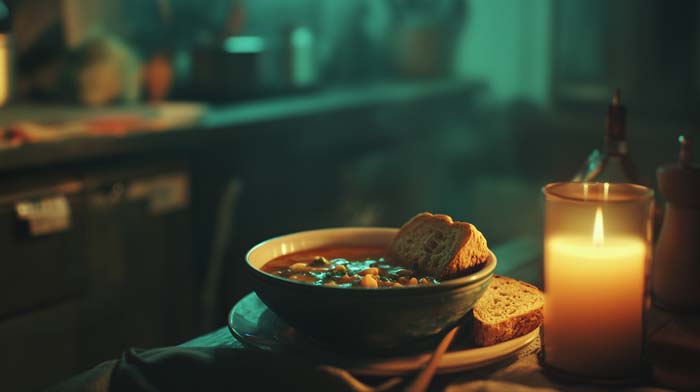
One night, months later, Evan found himself doing dishes again. The kitchen light was warm. The day had been long. His phone sat on the counter with a dozen episodes queued, each one offering its explanation of a messy world. He didn’t press play.
Instead, he stood at the sink and let the quiet settle. He felt his own breath, he thought of the line about solace, the art of asking better questions in unbearable moments. He realized that the point was never to stop learning. The point was to stop surrendering. To stop confusing information with wisdom, and wisdom with love. To stop using certainty as a refuge from responsibility.
 Evan dried his hands and walked out onto his small balcony. The city hummed below. Somewhere, someone’s music played through an open window, a dog barked, a couple argued softly and then laughed. He could smell the local Chinese restaurant. The world, unedited.
He felt questions rise, not questions that demanded answers, but questions that felt more honest.
What am I trusting?
What am I avoiding?
What would it mean to be useful?
What would it mean to belong to the human collective instead of the information caste?
He didn’t solve it that night. He didn’t need to. He just stood there, breathing, and felt something that had been missing return to him, agency, small but real. Not the agency of having an opinion. The agency of being human. And in that, he found a quieter kind of solace, no longer needing to be told what to think, claiming the dignity of being aware enough to ask the beautiful questions and then to live toward them.