Listening to Hear
Our current financial system is a machine where the gatekeepers are those who have accumulated the wealth that keeps the machine running and the machine is failing! There is a different option if we're listening.

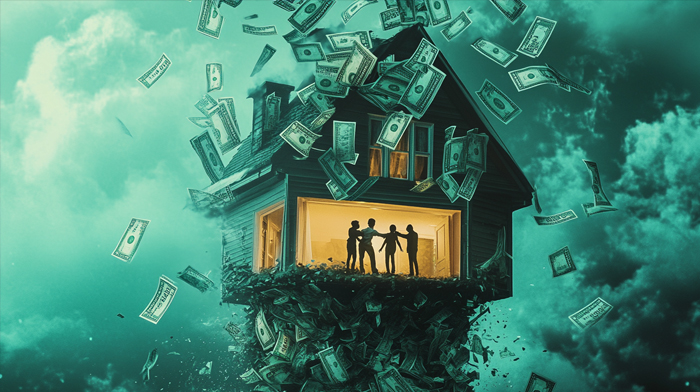
The real cost is not what you see on the bill, the total on the bottom line of the receipt. It’s not the monthly payment, the interest rate in bold, the tax line, or the service fee on the statement. From a larger perspective, it’s not the quarterly loss, the stock price or the annual return number announced from the podium with grave concern and managerial calm. These are the visible costs, the ones the system is willing to name.
The real cost is what disappears behind them: the exhausted nurse, not able to pay her bills, the student collapsing under the weight of crushing debt, what she can never quite escape, or the family, one emergency away from homelessness! At the global level, it’s the river treated as a dumping ground in the name of efficiency, the forest cut to the ground, destroying an eco-system, the town hollowed out by extraction such that people can’t make a living, or the public institution so bound by bureaucracy it no longer meets the purpose it was created to serve. The real cost is what the price tag leaves off on purpose.
 Modern capitalism has become extraordinarily skilled at hiding its invoice. It presents itself as practical, rational, inevitable. It tells us that prices reveal truth, that markets discover value, that institutions exist to provide accountability, and that finance is simply the neutral plumbing underneath our ordinary life. But beneath the visible economy exists the shadow economy, another architecture altogether, one that routes damage outward and calls it progress. Where social wreckage is externalized. An ecological burden that gets deferred and human vulnerability is monetized. And when the strain becomes impossible to ignore, the story shifts: austerity, hard choices, regrettable tradeoffs, the need for discipline. The costs remain real and they get assigned to those with the least power to refuse them.
The center of this arrangement, a mechanism we are finally starting to name: debt.
Debt is described as if it is a neutral tool, a simple agreement, an accounting device for matching obligations over time, columns on a ledger! However, this description is one that evades the reality of modern life. David Graeber shows, debt is never merely economic. It’s a moral language, a political structure, and a social control neatly braided together. It is a story about who owes, who deserves, who must submit, and who has the authority to enforce! Who has to make the payment? It turns human relationships into measurable claims, then treats those claims as obligations where the underlying system is manifestly unjust. Debt is not peripheral to the present order, it is one of the hidden load-bearing beams.

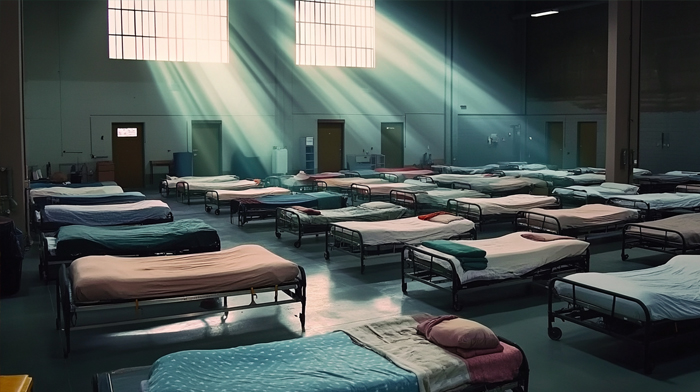

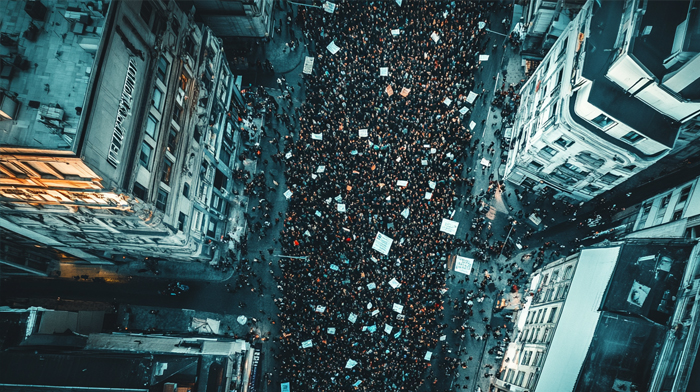




















Once we see that, an enormous amount of contemporary life becomes legible all at once. The point is not simply that people borrow. The point is that debt structures the terms for our existence. It reaches into households, communities, and governments, converting the future into a repayment schedule. It places a claim on tomorrow’s labor in advance. It narrows the range of acceptable risk. It makes people easier to manage because fear becomes ambient and noncompliance becomes costly. A person carrying debt is not just balancing a budget; it shapes a regime of obligation. A society built on debt is not just financing development; it is teaching people, every day, that life itself must justify its existence to the creditor.
 This is why the real cost of the current system cannot be measured simply in dollars. It is measured in chronic insecurity. In the psychological toll of living one invoice away from humiliation. It’s a learned habit of accepting absurdity because our survival leaves little room for refusal. It’s the slow conversion of citizens into debtors, neighbors into competitors, public goods into private opportunities, and forces human needs to be monetizable by demand curves. The hidden violence of the system is not only that it extracts, it trains us to accept extraction as normal. Yet debt alone does not keep such a system standing, it requires an administrative system, one built to protect it.
This is where bureaucracy enters, not as a side effect but as an enforcement mechanism. Graeber’s The Utopia of Rules names the condition with brutal precision: we live in an age of total bureaucratisation, where state and corporate systems inextricably entwined into a single procedural maze. Forms, audits, compliance layers, contracts, protocols, reviews, performance measures, approval chains. All of it presented as rational, impartial, and necessary. All of it is said to exist for fairness, accountability, or efficiency. But over time the machinery develops a self-serving logic of its own. Institutions become more concerned with documenting that it has followed procedure while everyday life slips through the cracks.
 This is one of the most expensive realities of the current order: the distance between power and consequence. Governments write the rules (legislative), governments implement the rules (executive), governments enforce the rules (judicial), and the whole self-reinforcing loop is presented under the façade of democracy! As if by repetition it has earned legitimacy. Corporate systems mirror the same pattern. Compliance replaces conscience, procedure replaces judgment, and context disappears into an unnamed workflow. The person suffering? The one at the counter or on the phone, hidden inside a spreadsheet; or the one outside the office door who encounters not a human being empowered to respond but a system designed to route responsibility into obscurity. No one individual has to own the harm, the harm is distributed across the process. This is what bureaucracy does so well: it turns extraction into administration and then calls the result efficiency.
Graeber calls this “structural stupidity,” and the phrase lands because we all recognize it. Intelligent, caring people who are doing irrational things because procedure demands it. Entire institutions acting as though the form matters more than the function. Rules multiplying while trust collapses, metrics proliferating where meaning is missing. In such a world, the rulebook becomes the shield behind which system hides, protecting itself from the very people it claims to serve. And because bureaucracy is backed blatantly by coercion; fines, exclusion, denial, legal force, economic penalties; it is never just neutral administration, it is an organized power structure wearing procedural clothing. Put these pieces together and the deeper corruption of money and debt come into focus.
 Those closest to money creation benefit first and those furthest away, absorb the consequences. It’s not just unfair, it is structurally distorting. How? Most money enters circulation through bank lending, as Ellen Hodgson Brown argues in The Public Bank Solution, control over credit becomes one of the most powerful levers in public life. Private banks do not simply move money around; they help determine what gets built, who gets funded, what risks are socialized, and what futures are deemed investable. If that power is governed primarily by profit or a self-serving bureaucracy, the system will predictably reward privilege, speculation and creditor interests. It rewards upward extraction over infrastructure, resilience, and public need.
This arrangement produces a civilization with an increasingly dangerous confusion at its center: it can no longer distinguish between money and value. Money appears to multiply, so it is assumed that value has been created. Asset prices rise, therefore society is prospering. Credit expands, therefore growth is happening. But the underlying question is rarely asked with sufficient honesty: what is the real value? Is it in the leveraged paper claim, or in the bridge that still stands, the water that is still clean, the home that is still affordable, the clinic that still functions, the neighborhood that still belongs to the people who live there? The current system answers, again and again, in favor of the financial language. This is why the rich grow richer while everyone else and the planet suffer.
 Brown offers an intervention that matters, it shifts the argument from critique to institutional redesign. Public banking starts with a simple but radical premise: banking should be treated less like a private casino and more like a public utility. If credit creation shapes the entire economy, then it should not be governed solely by institutions whose first duty is profit in the form of shareholder return. A public bank operates on another logic altogether. It prioritizes public need over private extraction, where lending can be directed towards infrastructure, local development, and economic stability. The gains are cycled back into the community rather than being siphoned away as private profit. In this frame, finance stops behaving like a parasite feeding on the host and becomes the life blood flowing inside a living system.
It’s not magic, and it is not a full solution by itself. Public institutions can become bureaucratic, opaque, or self-protective when they are poorly designed. Brown’s own logic makes it clear: public ownership is not enough. The institution must remain tightly stewarded, visibly answerable to public purpose, and focus on service over administrative sprawl. But even with that there is a caution, public banking points toward something essential: finance can be re-rooted in nourishment. Credit can be structured to strengthen the commons instead of strip-mining them. Banking can support a productive life rather than forcing a productive life to kneel before it. Once this possibility is opened, a larger redesign becomes imaginable.
 A needs-based economy would not ask first how to maximize extraction from people and place. It would ask what conditions allow life to flourish and how institutions can reliably support those conditions. It would treat money as a tool for circulation, not a god demanding sacrifice. It would measure value by contribution to living systems, not by the quantity of wealth extracted from them. In this world, banking would support shelter, infrastructure, health, local enterprise, ecological repair, and public continuity. A new form of governance shortens the distance between decisions and consequences. Bureaucracy is kept light enough to serve reality rather than replace it. And finance would once again be judged by whether it strengthens our culture, not by whether it fattens the balance sheet of those closest to power.
This is unmistakably a Fourth Turning moment: a period in which institutional legitimacy frays, inherited systems reveal their contradictions, and societies are forced to decide what deserves to be carried forward and what must be redesigned. The task is not to romanticize collapse or waste energy flailing against the old order, as if opposition alone is a blueprint. The deeper action is more disciplined, almost an Aikido-like move, understanding the use of force clearly. Seeing where it is distorted, and redirecting what can still be used. Building structures so coherent, participatory, and life-serving that people naturally begin moving toward them, not out of ideology, but because they feel and experience the difference.
That is the future-facing challenge beneath our present crisis. Not simply better regulation, certainly not cleaner branding by the same extractive machine. It’s a different institutional logic: banking restructured around public nourishment, governance reorganized around human consequence, money returned to its rightful role as servant rather than the master, where value connected to contribution In this framing the economy is reoriented toward the continued regeneration of life.
 The real cost is not just what a system takes from us or what prevents us from building while we are busy paying for its failures. The task now is not to obsess over dismantling the old system for its own sake. Rather it is to understand its limits without illusion, reclaim what is still workable, and get busy designing the new one! The one that nourishes people and our planet, restoring dignity, and making participation more powerful than extraction.
When we build it, they will come…