Months earlier, they’d sat at the kitchen table filling out her application. She looked at him, and with a nod of his head, he said: “Open it, read it out loud.” Sally felt trepidation. What if she didn’t get in? Her hands shook as she opened the envelope, pulled out the letter and unfolded it…”Dear Ms Wainright, We are pleased to accept your enrollment starting in the fall of the upcoming academic year.” What came after that was a blur, squeals of joy, hugs, and pictures. What Sally saw, the smile on her father’s face, one she had never seen before, was a glimmer of happiness. This was more than a victory for her; it was a victory for the family. A recognition that all the sacrifice had led to success, an imprint on Sally’s worldview.
 Freshman year was a blur, dorm rooms, roommates, and “social” activities, a new freedom, and quiet confusion. For Sally, the academics were familiar, easy; the social life was…awkward. What helped was Alicia, she was from the East Coast, she would tell stories of summers at the beach and winters skiing in the mountains. Without saying it, it was obvious that Alicia’s family didn’t have to sacrifice for her to be at college. She took Sally under her wing, including her in social activities, and by sophomore year, they were inseparable. It started the way many friendships do, fast and quietly. Study sessions turned into dinners. Dinners turned into late-night walks and girl talk; school, family, relationships, life, dreams, they became the kind of friends you have for life.
Sally did well in college; those first years focused on her general education. But there came a time to decide, she had to declare a major! It was hard for Sally, she’d always just focused on her grades. The system had always told her what classes to take, and underneath was the plan! So Sally asked herself, what would make her father happy? She had always been good at math. She looked at her options, science, engineering, business, and she saw it…Finance and Business Administration. It sounded important, but more importantly, she knew her father would approve.
The next couple of years flew by for Sally, deeply involved with her coursework and in the summer between her junior and senior years, she stayed on the East Coast. Alicia invited her to spend a couple of weeks with her family at the beach. Besides having fun, Sally got to see a different family dynamic. Alicia’s parents still cared about her school, but they asked different questions. What was she excited about? Had she found something she was passionate about? Did she have any plans after finishing? For Sally, the only question she knew how to answer, the last, was part of the plan. The answer – to get a job, one that would demonstrate success.
The senior year at college offered Sally an opportunity to take some elective classes related to her major, but not specifically in finance or business. Alicia suggested Sally join her in one of her courses. Alicia was in an interdisciplinary program called Cultural Psychology, the intersection of culture and psychology. The course she suggested was a seminar on Community Development and World Building. Just the title evoked a feeling in Sally she’d never felt before! At that moment, a seed got planted.
The end of the year brought mixed feelings for Sally. She’d received her diploma, her parents beaming with pride as she walked across the stage. She’d packed up her belongings for the trip home with her parents. The hardest part, a final dinner with Alicia! They went to their special restaurant, the one that served comfort food, good wine and a place where they’d had many intimate conversations. But this one was different, it was bittersweet, it wasn’t goodbye, more a see you later that wasn’t set in time. They talked about their plans, Sally returning to Oakmont to look for a job. Alicia was going to take some time to travel, to see the world. And when the time came, the hug where neither wanted to let go, the tears flowing, and the closing of a chapter of their life.
 Sally got home after graduation and set to work on the next step in the plan…find a job. She did her research, accounting, banking, or maybe corporate finance, all offering paths to success. She sent out resumes and waited anxiously; meanwhile, she followed Alicia’s journey. Every week, a new picture, London, Paris, Rome, sights, food, and selfies. It looked amazing!
It was a Wednesday like any other Wednesday when the phone rang. Sally’s mother heard Sally answer, a casual “hello,” “yes, it is” “yes, thank you, ” and ” see you on Friday.” Mama, it was Oakmont First Bank, I have an interview on Friday. That night, Sally was waiting at the door when her father got home “Papa, I got an interview at Oakmont First.”
“That’s wonderful, Sally,” he said as he gave her a hug.
Sally got the job, Junior Loan Officer at Oakmont First Bank. It sounded important; the plan was complete. It was mostly dotting I’s and crossing T’s on paperwork. What Sally got to see wasn’t what they taught her in school; she became one of the cogs in the machine. One month became two, then twelve. She was good at what she did, the Junior disappeared from her job title, and somehow it felt hollow. All she got to see was what was behind the curtain of the machine.
Alicia was now in South America, the rain-forest in Brazil, the glaciers in Argentina, the ruins in Peru…Sally was missing her friend, but felt more deeply that something was missing in her life. Then one day, a note from Alicia, “I’m coming to Oakmont for a visit!” Sally was excited; she had so much to share, so much she wanted to ask, and she was ready to spend time with her friend.
The day Alicia arrived was fabulous; it was like no time had passed. There were intimate dinners, comfort food, good wine, and girl talk! During the day, while Sally worked, Alicia explored Oakmont. It had a city feel, but something was changing. It was facing some difficult economic realities, and some new solutions were developing, one of which was the Community Wneeds Association, CWD.
What happened next surprised Sally. How could it be possible? Alicia had only been in town for a few days when she announced she’d gotten a job at CWD. She would take a quick trip home to pick up some belongings and start work on the first of the month! Sally felt perplexed. Alicia was living this amazing life without a plan.
The next couple of years reminded Sally of being back in college. Her working at the bank, Alicia working at the association, long walks, dinners, and girl talk. As time passed, something in Sally changed, a feeling of emptiness, like something in her life was missing. Alicia would talk about all the fun projects the association was working on, while Sally was dotting I’s, crossing T’s…it lacked meaning.
 Then one day, a file appeared on her desk, Daniel Reyes, marked URGENT / RESTRUCTURE REVIEW…a red flag that meant the machine had already decided.
Daniel ran a neighborhood grocery, one where Sally’s family lived. One she used to go to as a kid. One where her family still went. One of the last in that part of Oakmont where big chains put pressure on the little guy to survive. His store wasn’t just a business; it was a place people relied on. He extended credit to elders who forgot their wallets. He let kids buy single bananas when their parents were working late. He stocked the foods that people in that neighborhood actually ate.
Sally looked at the numbers; his business looked strained, but not hopeless. Costs had risen. A supplier contract had shifted. Foot traffic dipped during a city construction project that blocked the street for months. He’d been late on payments, then caught up, then late again. Sally read his notes and opened his email thread. It wasn’t corporate. It wasn’t polished. It was a person asking to be seen. Explaining why what he offered meant something.
What was different about this case, he’d been working with an attorney to convert his business into a worker/consumer cooperative. He’d gathered a small group, two long-time employees, a few community members, and a local nonprofit willing to help with governance and training. The plan was unusual, outside the box, and it was practical. Shared ownership. Shared responsibility. Community investment. A way to keep the store alive instead of selling out to a chain.
Sally felt something, hope, meaning, purpose. This was what solutions looked like in real life: imperfect, grounded, human. Then she saw the internal memo.
Recommendation: Cooperative plan introduces non-standard risk profile. Deny restructure, proceed to foreclosure.
This was the language of the machine! Sally walked the file into her manager’s office, heart racing, hand shaking, about to say something that could have consequences. “I think we can make this work,” she said, trying to keep her voice steady. “The cooperative plan stabilizes cash flow. The community is invested. He’s not asking for forgiveness, he’s asking for a structure that fits reality and supports the neighborhood.”
Her manager, Tom, looked tired; he’d been loyal to the machine for a long time. “It’s not personal,” he said.
“It’s not personal?” Sally replied before she could stop herself. “It’s a neighborhood, it’s people, it matters.”
Tom sighed. “Sally, we can’t make exceptions just because something feels meaningful.”
The sentence landed like a blade. “So we sacrifice a viable business based on decisions that are easy to defend?” she asked quietly.
Tom’s eyes hardened. “We make decisions based on policy.”
 Sally stared at him, and for the first time, she felt the full moral absurdity of it: policy was the shield the machine hid behind. She left the office and went back to her desk. She reread Daniel’s emails until they stopped being text and became a voice in her head. She imagined the store closing; the neon sign going dark, the employees scrambling to find work, the elders losing a place they trusted, the kids losing the one store owner who knew their names.
That night, Sally had dinner with Alicia, it started out like every other dinner: food, wine, girl talk. Tonight, Alicia could tell something was different. “What’s wrong, Sally?”
It was like Alicia had opened a soda can that had been shaken. Sally started telling the whole story: the neighborhood store, the cooperative conversion, the bank’s denial, her boss’s indifference, running her sentences together, barely taking a breath. Alicia let her ramble, feeling the emotions build in her friend’s voice until she finally burst into tears, “I hate my job.” There it was, the truth Alicia had known and Sally finally admitted.
Alicia looked Sally in the eye, “I know, take a breath.” She refilled their wine glasses and took a sip. “We can do something about this. Get me the information about the store and cooperative conversion. I’ve got an idea, no promises, just a possibility.”
“Thank you,” Sally said. “What about my job?”
“That’s something you’ll have to decide. I’ve watched you since college, following your plan. Sacrificing yourself for what you thought would make your family happy, your father happy. It’s time for you to consider what would make you happy.”
Sally knew it was true. The problem was that she didn’t know the answer.
The night ended with another one of those hugs where neither wanted to let go. Alicia whispered in her ear, “Give yourself some time.”
Sally didn’t sleep well that night. Should she stay? Should she go? What would her father say? How do I save the store? She knew one thing she could do.
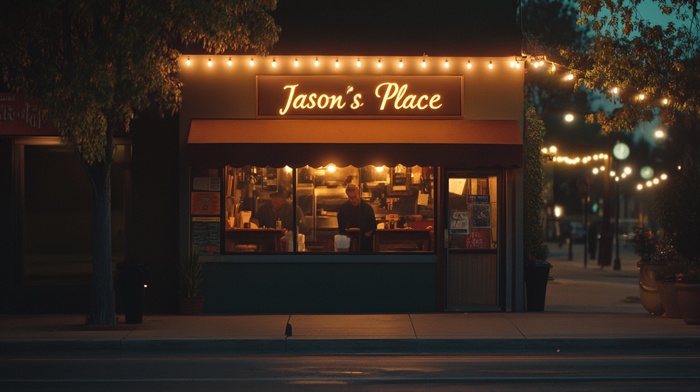
 The next day, Sally went into the office and made a copy of the cooperative proposal. She met Alicia at Jason’s Place for lunch and handed her the file. “What are you going to do?”
“Take it to the Public Bank,” Alicia said.
Sally frowned. “Public Bank?”
“A bank designed to lend for public benefit,” Alicia said.
Sally felt something stir. Not exactly hope, more like a memory of hope.
They hadn’t taught her about that at college, “Is it real?” she asked.
Alicia nodded. “It’s real, a new way of doing finance.”
A few weeks went by. Sally thought about her job. What would make her happy? She didn’t have an answer.
Alicia called her one day, invited her to come down to Mr Reyes’ market on Friday, after work, and told her to bring her family. When Sally arrived at the market, Alicia was there, along with Mr Reyes, her mother, father, and a man she didn’t recognize. The unknown man and Mr Reyes were going through some papers, sign here, initial there, it reminded Sally of the machine, but felt different. In the end, they shook hands, and the man left. Mr Reyes looked at Alicia and said, “Thank you, you saved my business.”
“It was Sally, Mr Reyes. I wouldn’t have known about it if she hadn’t told me about what you were trying to do.”
He turned to Sally with a look of surprise, “You work at the bank.”
“I know, when your file came across my desk, I had to do something about it.”
Mr Reyes said, “Thank you, Sally. It means a lot to my family and the neighborhood.”
Sally and the family went out for dinner that night, Alicia joined them. Dinner, wine, and chit chat. As they were bringing dessert, Sally’s father looked at her, “Sally, you had something to do with this?”
A familiar trepidation arose in Sally, “Yes, Papa.” Watching his reaction closely.
Her father smiled, “I’m proud of you, Sally. You saved a part of the community.”
“Thanks, Papa.”
Alicia gave Sally a nudge under the table. “Papa, I want to tell you something.”
“What is it, Sally?”
“I’m not happy, I don’t like my job,” she said.
There was a long pause, as her father stared at his dessert, and when he looked up, he said, “I want you to be happy, Sally. You should do something you enjoy, something that is meaningful.”
 A tear rolled down Sally’s cheek, “Thank you, Papa.”
They finished dessert in silence, her parents excusing themselves, leaving Alicia and Sally alone. Alicia smiled at Sally, the kind of smile where a friend knows how difficult it was for Sally to do what she just did. “What’s next?” she said.
Sally looked her in the eye, smiling from ear to ear, “I want to take a trip with you!”
Monday morning, Sally walked into the office at the usual time. What was different was the box she carried. She walked to her office, packed up her things, and then walked over to Tom’s office. She knocked. “Come in,” he said. Sally opened the door and handed him a letter.
“What’s this? He asked.
“It’s my resignation,” she said. She turned and walked out the door, leaving the plan behind.


 Her family wasn’t wealthy, but they knew how to work hard. Her father had worked all his life, and wanted a better life for his children…his goal, for Sally to be the first to go to college. He believed college was a necessary step to a successful life. Sally didn’t know it, but she’d been signed up for a plan.