Listening to Hear
Our current financial system is a machine where the gatekeepers are those who have accumulated the wealth that keeps the machine running and the machine is failing! There is a different option if we're listening.

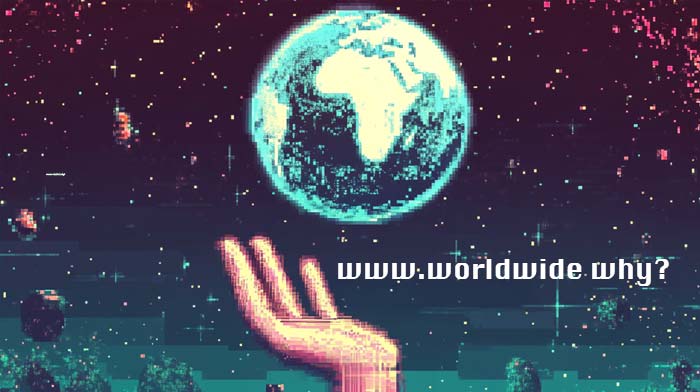
Most of us met the world wide web as a promise and an enthusiasm of possibility. The novelty of email, online shopping, unlimited information. A promise that knowledge would be democratized. That instant connection would address loneliness. The distance between “you” and “me” would shrink to the distance from my keyboard to your screen! A promise that if we could just see more, learn more, link more, we would become wiser.
 It was called the dot com rage…or as it is now called by some as the dot bomb! Here we are, years into the experiment, staring at screens that can put the entire world at the tips of our fingers. Who could have predicted the impact of social media, confirmation bias and the spread of “fake news.” Unfortunately many of us feel strangely less powerful in our lives. More informed, maybe, is it real? More stimulated, definitely, what’s being stimulated? Sadly we’re more tired, more cynical and more unsure what to do with everything we know.
This is where a new question belongs; one that isn’t code, a website or an app, but something that touches our soul, brings purpose.
Why are our systems failing; not just practically, but spiritually? Why do so many people feel used up by a world that claims to be “advancing?” Why does it feel like the economy is winning while in life we are losing? And why should an ordinary person reading these words on their screen between meetings or before bedtime or feeling the ache of another news cycle, care enough to act?
 Simon Sinek names the underlying problem in a clean way: we built a civilization obsessed with what and how, and we forgot the why. We can optimize tactics, scale products, and refine strategies until they shine, producing a glowing quarterly report, an attention grabbing headline or a meme that goes viral, but without purpose underneath they are hollow, or worse yet a kind of elegant self-harm. People can feel it. Bodies can feel it. Communities can feel it. The planet is feeling it!
When purpose is missing, something fills the vacuum: fear, manipulation, competition, the endless pressure to prove we deserve to be here. So let’s start where the real breakdown begins, not in the headlines, but in the hidden operating system!



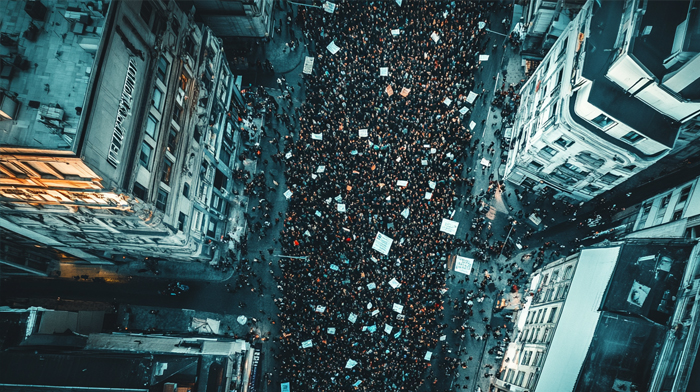



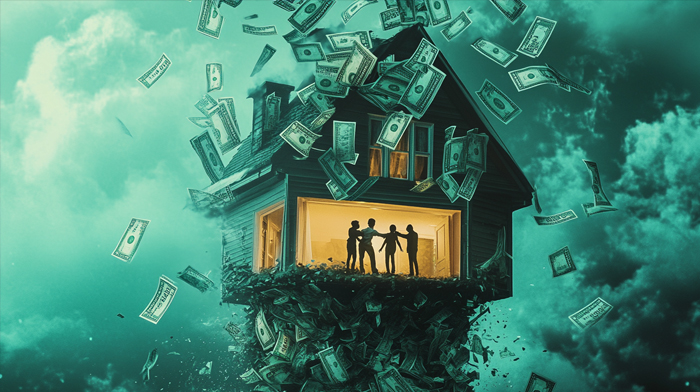








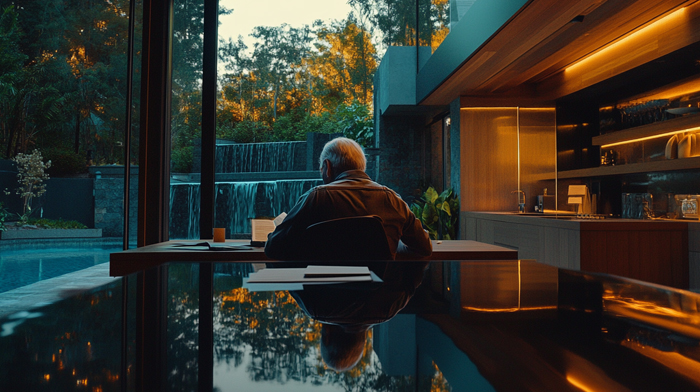








 The failing “why” beneath our systems
Asking the question, does purpose exist? There are only 2 answers; yes or no. Some might try to rationalize this and say maybe, but I offer this example; Does a spoon have a purpose? If you say yes, we can argue it can have many. If you say no, then the question arises is why did we create it? From an objective perspective we can argue if we attribute purpose to anything, we must attribute purpose to everything, otherwise we’re being subjective. We may not understand something’s purpose, that doesn’t mean it doesn’t exist. If we look to nature, it doesn’t create superfluous things, everything serves a purpose. Thus, every system has a purpose, whether we see it or not.
Now let’s apply this perspective to human systems. Sometimes purpose is spoken aloud in mission statements and speeches. More often it’s revealed in what the system reliably rewards: what it celebrates, what it funds, what it protects, what it sacrifices without blinking. If we look honestly at the incentives that shape modern life, the implicit “why” is hard to miss. It isn’t “human dignity.” It isn’t “the thriving of the commons.” It isn’t “continued life.”
The underlying why is closer to: maximize returns, increase control, extract value, and keep the scoreboard rising. Because we humans are meaning-making creatures, we learn to translate that into identity: If I’m not climbing, I’m falling. If I’m not winning, I’m losing. If I’m not marketable, I’m worthless.
This is why burnout isn’t a personal failure; it’s a predictable system outcome. This is why “success” so often carries fear, anger and grief; because it can feel like winning a game whose rules where we never asked whether the game was worth playing.
Sinek makes a sharp distinction between manipulation and inspiration. Manipulation is the short-term lever: pressure, fear, discounts, status, urgency. It gets results quickly while slowly eroding trust. Inspiration is different. It’s the long-term engine: people move because the purpose resonates with who they are and what they love.
Many modern institutions run on manipulation disguised as motivation. They squeeze output with incentives that look good on spreadsheets while feeling corrosive in human nervous systems. Over time, the system may grow in metrics while shrinking in meaning. This is how perverse incentives end up running the system. And then we act surprised when people disengage, numb out, or burn the candle down to ash.
So yes; our systems are failing in outcomes, but more deeply, they’re failing in purpose.
If “Start With Why” names the loss of purpose, The Infinite Game names the category error underneath it: we keep playing life like it’s a finite competition in a world that requires infinite care. Finite games have clear rules, fixed players, and an end point. Someone wins, someone loses, the scoreboard closes, everyone goes home.
 But business, politics, community, culture, and ecology are not like that. They are infinite games: the players change, the conditions change, and there is no final “winner.” The goal isn’t victory. The goal is continuation of life, to keep the game going in a way that the players thrive!
When leaders treat an infinite game with a finite mindset; obsessing over quarterly results, customer wins, dominating rivals, climbing league tables; things get brittle. Ethics become negotiable. Values get ignored. Actions become self-centered. Trust becomes collateral. People become resources. The living world becomes an “externality.”
A finite mindset can generate spectacular short-term results and long-term ruin, because it confuses results with health. It’s like sprinting on a broken ankle: impressive for a moment, catastrophic over time.
Infinite mindsets ask different questions:
This is what Sinek calls a Just Cause?
That last phrase matters. A Just Cause isn’t the start of some campaign speech, it’s a future that is life-giving where people keep showing up even when it’s hard, even when there’s no immediate payout, even when nobody notices and there’s no applause!
This is where Contributionism and Living System Design enter; not as another political theory, not as another ideology, but as a repair of purpose. A return to the question our modern life keeps avoiding:
Contributionism begins with a simple, almost disarming re-frame: economy is the management of our shared home. Not an abstract market. Not a casino of numbers. Not a machine for maximizing returns. A home, not just for us individually, but for all life.
If that sounds abstract or idealistic, it’s worth asking: what could be more important than designing for the conditions that allow life to continue? What could be more strategic than building systems that don’t devour the very foundations it depends upon?
Living System Design takes a further step of learning from the oldest engineer on Earth: nature itself. Healthy ecosystems, bodies, and communities survive not because they dominate uncertainty, but because they can sense, adapt, and regenerate. They hold a homeostatic balance. They respond to feedback and adapt or evolve. It gives us a set of core values and principles that function like a living system’s vital signs and immune response. Values are what we measure and are the signals of health. Principles aren’t ideals, they are design constraints that respond to the feedback in a way that keeps life in dynamic homeostasis. In other words: a living why, needs a living how.
Sinek’s Golden Circle says the order matters: start with why, then how, then what. Living System Design frames the “how” of a life-centered why. Contributionism translates it into “what” we do each day; how we exchange, build, measure, repair, and belong. And the why that holds it all together, the world wide why; It’s not “growth.” It’s not “winning.” It’s not “dominating rivals.” It is something like:
That’s an infinite game.
 The Missing Voice
Our economic stories are built on singular atomic units: individuals. The individual chooser. The individual consumer. The individual competitor. Contributionism keeps the individual and places them inside a larger living reality.
It offers a simple triad that changes the entire conversation:
The wneeds represent the voice of a system, which has no voice to speak. It captures the needs of the whole system, making both “my” and “your” needs possible: community, watershed, soil, schools, supply chains, trust, the living world, and the future.
This is where the web becomes more than a network of information. It becomes a mirror. Because the truth is: the needs of the system are not separate from ours. They are the ground on which we live. When a system is depleted, everyone’s needs become harder, more expensive, more conflict-prone. When they go unmet we start to play a finite game. When the system is healthy, needs become easier to meet because life itself is more supportive.
A needs-based economy asks questions that feel almost ancient:
This is not moral perfectionism, it’s a literacy that develops wisdom.
When we ignore the wneeds, we can “win” in the short-term while collapsing the field of play. That’s the finite mindset in disguise: grab what you can, extract what you can, externalize what you can, because the end of the game is imminent.
By playing an infinite game; We design differently. We insent differently. We measure differently. We reward differently. We build trust as infrastructure, not as something to extract from!
A common mistake in moments like ours is to float above the Earth in abstraction. To argue about theories without touching the place where life is actually lived. Purpose doesn’t become real until it becomes local, becomes personal.
 This is why the “where” in our larger context matters so much: bioregions, watersheds, neighborhoods, organizations. Where you stand. Where the consequences land. Where feedback is immediate and unfiltered through layers of bureaucracy.
If you want to know whether a system is healthy, don’t ask for its marketing story. Ask for its lived experience. Ask what it feels like to be an elder in summer heat. Ask what it feels like to be a parent at the grocery store. Ask what it feels like to need help and not know who to call. Ask what it feels like to work hard and still feel disposable. Ask what it feels like to be in the myriad of paperwork to get something simple done!
We must insist on short feedback loops; sensing close to where impacts happen. Build on participation close to where the need exists: local commons, care webs, food webs, mutual aid, microgrids, cooperatives, learning pods, tool libraries, repair crews. Not because “local” is automatically virtuous, but because life is local, actions are local, impact is local. Treating a living economy like an organism, it needs organs: small, distributed, functional, resilient “cells” of practice that can adapt to conditions without waiting for permission.
This is how the infinite game is played: not with one grand move, but with many grounded moves, informed by previous moves, focused on improving the conditions for life.
 Why now: an inflection point without panic
There are moments in an infinite game when something shifts, the unexpected, the unaccounted for, the unintended. Not because someone declared it, but because life creates it; The old strategies stop working. The old promises feel thin. The old institutions lose trust. The old stories aren’t relevant anymore.
We are living in such a moment. Here’s the point that matters: urgency does not require hysteria, it requires clarity. If the purpose underneath our systems is distorted, if the why is extraction, dominance, and short-term victory, then the future will be shaped by that distortion, whether we consciously choose it or not. But if we reset the why, if we name a Just Cause that is life-centered and participatory, then the “how” and “what” can align into something durable.
Sinek says an infinite-minded leader has the courage to lead according to values rather than the current scoreboard. Contributionism asks ordinary people to practice that same courage; by becoming participants, not just consumers; by building trust locally; by treating rivals as teachers; by refusing the manipulations that trade meaning for convenience; by anchoring daily choices in a wider “why” that includes the wneeds.
The time to reset our why is now, not because doom is inevitable, but because a direction is being chosen every day by default.
So here is the question behind the question: What if the world wide web was never meant to be merely a marketplace of attention? What if it could become a world wide why? A distributed remembering of what our systems are actually for? Not a single ideology. Not a single program. A shared orientation that returns us, gently but insistently, to the reader; the person at the keyboard, behind the screen.
Not to ask you to carry the whole world. But to ask you something quieter, more powerful:
 What is your Why?
Not your brand. Not your résumé. Not your performance. Your why, what you refuse to abandon. What you want to protect. What you want to grow inside and outside. What kind of future you’re willing to be part of, even imperfectly, even locally, even starting small. Once you name that, you’re what / where / when / how, will begin to reorient themselves.
The world wide why stops being a clever phrase and becomes what it was always meant to be:
A global question with a local answer.
A purpose you can practice where you live.
A way to play so that life keeps playing.