Listening to Hear
Our current financial system is a machine where the gatekeepers are those who have accumulated the wealth that keeps the machine running and the machine is failing! There is a different option if we're listening.

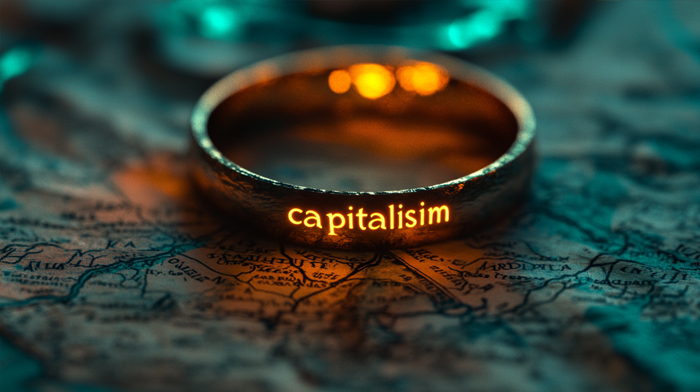
Insert chip here, tap there, buy now, it’s become so automatic we don’t even know the hole we are digging. It’s everywhere, the grocery store, an online portal, the doctor’s office or when our car breaks down. When a nation borrows. When a family falls behind. It sounds neutral, practical, almost invisible. But hidden inside the behavior is an entire civilization. A worldview, a design, a story about money, who gets access to it, what counts as value, and who bears the burden when the system begins to crack.
And the system is cracking.
 It’s happened before, we are living through another monetary tipping point, and while many sense it, most don’t understand it. Inflation is treated as one problem. Sovereign debt as another. Housing costs as another. War, instability, erosion of the middle class, social distrust, and civil unrest as still others. But they are not isolated breakdowns, they are symptoms moving through the same body. A body called the financial system whose life blood is money. It is the operating system beneath modern life that is no longer able to hide its logic. The sickness can’t be avoided any longer.
What is failing isn’t policy, it’s a design built on an unstable foundation.
Our current debt-based, fiat, speculative monetary system is presented as if it is a noble tool that has somehow been misused. The truth, it is a system whose stewards have corrupted its purpose and we can’t let them off the hook. What started as a simple mechanism for saving and lending in communities has become a runaway train heading for the next canyon where the bridge is out! The entire financial crisis of 2008/2009 was orchestrated by the same stewards of the system who benefited most from the crisis.
It rewards those closest to money creation. It benefits those with first access to credit, leverage, and assets. It privileges financial claims over real contributions. It has become a system to make more money for those who already have money. It bypasses the slower, more grounded work of meeting human needs. It expands wealth upward and pushes instability downward.

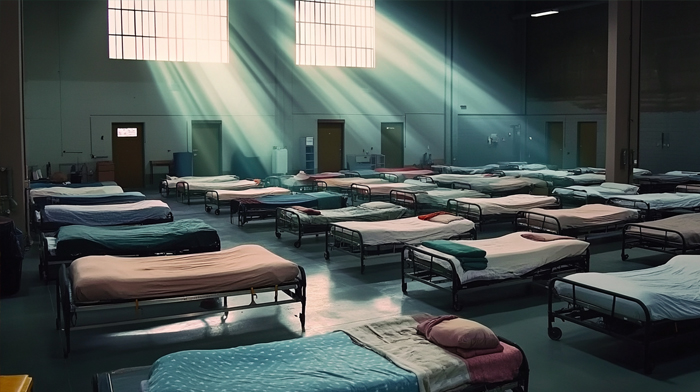

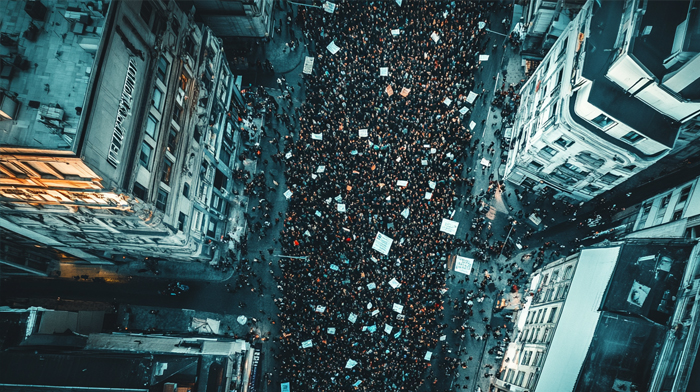


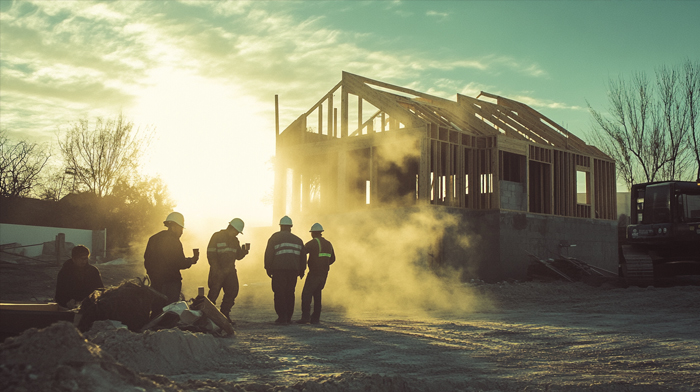
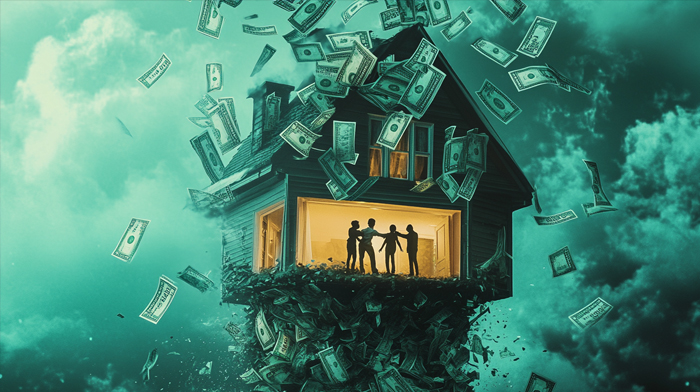













This is what financialization means in lived terms. Money ceases to be a humble medium of exchange and begins to behave as if it possesses intrinsic value in itself. It becomes the thing that must grow, be protected, serviced and optimized. More and more of society reorganizes itself around this imperative. Housing becomes an asset before it is a shelter. Land becomes a speculation before it is a place. A forest becomes a timber inventory before it is a place to take a walk. Care becomes an overhead cost. Water, crops, minerals, infrastructure, and attention get absorbed into a spreadsheet of yield. If I can make money with my money I am not creating any value in the lived world. The economy becomes less about provisioning life and more about multiplying returns.
 That distortion is not just technical, it is moral and psychological. It changes the feel of our daily lives. We feel it in our bones long before we can name it, if ever. It’s the polluted lake in which we swim, never knowing what fresh water feels like! We work harder and feel less secure. Even if we do everything we are told to do, we still fall behind. We watch necessities become luxuries, and luxuries become symbols of worth. We feel the pressure of unpaid bills, declining account balances, missing retirement savings, rising interest rates, late fees, student loans, medical debt, mortgages, credit cards, taxes, rising prices! The list goes on and on. Under these conditions, money is no longer a tool, it’s the weather, and for many, the skies are pretty dark.
This is where David Graeber’s lens matters. Debt is never just accounting, it is never simply a neutral record of exchange. Debt carries gravity, a moral force. It is used to justify hierarchy, obedience, exclusion, punishment, and dispossession. It turns power into an obligation and then paints that obligation as a virtue. If you owe, then you must submit. If you cannot pay, your suffering will be narrated as failure. What is it really? It is a consequence of a system built to orient life around repayment. Debt is one of the oldest ways human beings have been enslaved, and our modern financial system has industrialized it. You know the saying, “if you find yourself in a hole, stop digging,” it only works if you know you’re digging.
Further, debt becomes a form of coercion, not simply a record of what has happened; it structures what happens next. It limits our freedom by colonizing our future. It tells us which jobs to take, which risks not to take, how many hours we must work, how long we must endure, and more deeply, the kind of truth we can “afford” to speak. The real cost goes beyond the interest we pay, it’s the parts of our life that get deferred or worse, destroyed. It’s the impact on our bodies and minds. It forces households, communities, and entire nations into service of financial claims. More taxes, less services, more bureaucracy, less humanity. The result is a culture in which our energy is increasingly organized around keeping the machine running rather than keeping us alive and enjoying life.
This is the hidden violence of the current monetary order. While it can arrive as a financial crisis, it’s not always a dramatic spectacle. More subtly it arrives as chronic stress, delayed adulthood, exhausted caregivers, impossible housing markets, hollowed public goods, unmet needs and a middle class that slowly dissolves into payment plans. It arrives as people who no longer experience their lives as something they are building, but as something they are servicing. Simply said, it’s living for work versus working to live!
 But here’s the thing nobody talks about, speculation, a casino of money: the strange triumph of a system that rewards manipulation more richly than stewardship. It’s a zero sum game, for every person who made money with their money, somebody else lost it! Wealth is extracted from rising land values, housing scarcity, commodity swings, rent streams, financial engineering, and asset inflation, all without creating any corresponding life-serving value. Our commons, aka the planet, becomes collateral. Shared assets are captured, monetized, and harvested. The system rewards those who can position themselves at the chokepoints of circulation, not those who keep the commons alive.
This is why the crisis of money is not just a crisis of fairness, it is a crisis of culture. We have built a monetary architecture that treats extraction as wisdom and accumulation as success, even as we are eating through our ecological and social foundations, the things that represent our real wealth.
So the question is not whether we need more money. The question is: what is money’s purpose?
Joel Solomon’s clean-money frame reopens that question with moral clarity. Money is not inherently corrupt, nor is it inherently wise. It is directional, it carries intention, it funds one future instead of another. Is it aligned with our values or severed from them? Is it being used as a life-serving tool or allowed to become the corrupt master? Once we see this, money can be removed from the altar and it can become the tool it was always meant to be.
Here is where Bernard Lietaer’s contribution becomes essential.
 The great weakness of the current monetary imagination is its monoculture, what we’re calling monomoney. We have come to assume that one dominant currency system can organize all human activity. One money to rule them all, One money to find them, One money to bring them all and in the darkness bind them. Or more directly, one logic, one scorecard, one mechanism for measuring value across every domain of human activity. However, from agriculture we know monocultures are brittle. They invite disease, depletion, and collapse. In ecosystems they reduce resilience. In culture they flatten diversity. Monomoney produces systemic fragility because everything must pass through a single design, no matter how poorly that design fits the complexity of real life.
A living system does not depend on one channel. It uses multiple flows, multiple relationships, multiple reciprocal patterns, and multiple forms of circulation. Resilience comes from diversity. Lietaer’s insight is that money should be understood the same way. A healthy society should not depend on a single monetary instrument trying to do everything. It should develop a multi monetary ecology: multiple value chains, complementary currencies, mutual credit systems, dynamic currencies, and other forms of exchange, designed for distinct purposes and woven together to form a web of life.
This is not utopian decoration, its structural sanity.
We must start with the foundation that different kinds of value require different ways of being recognized. A monomoney might be good for some things, like large-scale standardized exchange. But it is terrible at recognizing most of the activities that actually keep communities alive. Care work. Local reciprocity. Ecological stewardship. Repair. Cultural continuity. Shared infrastructure. Trust-building. Neighborhood resilience. Skill-sharing. Mutual aid. These get marginalized by our current monetary system, yet are essential to a life giving economy. In a speculative debt-based system they are routinely undervalued or rendered invisible because they do not produce monetized return.
 However, in a multi monetary system the questions change, instead of asking; “How do we price everything in the same unit?” It asks; “What flows of value are we trying to support?” It takes into account how currency is created, how it circulates, how it is retired, what it rewards, what it restrains, what behaviors it amplifies, what social bonds it strengthens. Most importantly, what kind of life does it make possible? This is the difference between treating money as an asset and treating it as a relational technology.
Shifting from monomoney to currency(s), current-see, flow of value, a whole new set of possibilities open up. A diverse set of currencies become the tools for the flow of value inside a living system, the architecture changes. Mutual credit systems can allow communities to exchange value without waiting for scarce monomoney to trickle in from the outside. Complementary currencies strengthen local provisioning and regional resilience. Dynamic currencies can be designed to encourage circulation over hoarding. Distinct value chains can support forms of contribution that the existing model systematically misses. Instead of forcing every human activity through a narrow financial artery that can become clogged, we build a network of capillaries, an interwoven web which nourishes our living system.
This brings us to the heart of the matter: contribution is the new currency.
Not metaphorically, practically, morally and structurally.
 An economy of participation begins by asking very different questions, not “How much can I get?” rather “What can I give that keeps our shared home alive?” The answer is not mysterious. Time. Care. Repair. Knowledge. Wisdom, Teaching. Stewardship. Attention. Creativity. Maintenance. Food growing. Conflict tending. Tool sharing. Ecological restoration. Healing. Hospitality. Craft. Coordination. And the list goes on! These are forms of real value because they sustain life, increase resilience, generate trust and build relationships. They make our communities more capable of meeting needs without collapsing into fear and competition.
In this model, contribution becomes visible, trusted, and generative. Needs are met through shared effort. Surplus can flow back to the commons instead of being siphoned away. Dignity becomes essential, equality no longer means sameness; it means building a system that recognizes more forms of value more fairly, distributes participation more widely, creates opportunity for everyone and stabilizes the conditions for a culture where everyone thrives.
This is a profound shift. It moves away from an economy organized around scarcity and obligation to one organized around contribution and circulation. It does not deny exchange; it deepens it. It does not abolish money; it reorients it. It places money back inside life instead of placing life inside money.
So when you hear that small everyday question; “How would you like to pay for that?” Perhaps you should hear the deeper one inside it. What kind of world is this payment system creating?
 A world in which those closest to financial power receive first access, while everyone else absorbs the inflation, instability, and debt service? A world in which commons are enclosed, households are disciplined, and money chases itself while everyday life frays? A world in which value is reduced to what can be extracted, priced, and accumulated?
Or
A world in which currency becomes the servant of life: a tool for circulation, trust, reciprocity, and regenerative exchange? A world with multiple channels of value, resilient local and regional flows, and currencies designed to support contribution rather than cannibalize it? A world in which the economy is not a casino built on debt, but a living system through which our needs are met, surplus is shared, and we keep the whole system alive?
That is the real monetary choice before us.
The future of money goes beyond abstraction and becomes design. More plurality. More accountability to life. More courage to admit that the old story is breaking down because it was built with the wrong center.
The deeper question is not simply how we pay. It is what and whom money is helping us become.