Listening to Hear
Our current financial system is a machine where the gatekeepers are those who have accumulated the wealth that keeps the machine running and the machine is failing! There is a different option if we're listening.

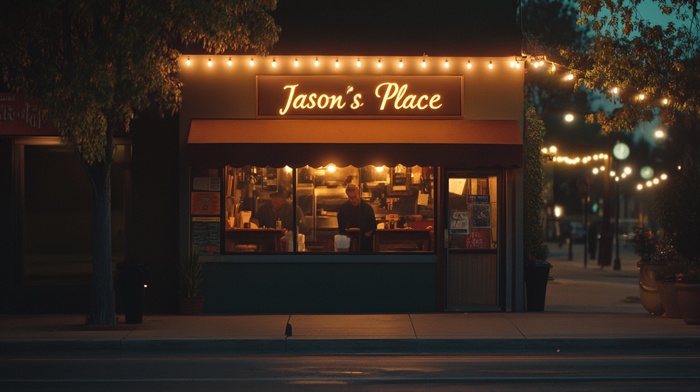
Jason’s business had been around for a long time, he could tell the town was getting squeezed without looking at a spreadsheet. It showed up in small, human ways: the regulars who still came but skipped dessert; the couples who split an entrée and didn’t make a thing of it; the familiar faces who waved through the window and kept walking because a night out had become a luxury. And he saw it most clearly with Deanna.
She came in on her regular night, Tuesday, her hair still pinned up, faintly smelling of hairspray and the citrus on her hands from using shampoo and conditioner, she took care of other people all day. She owned the hair saloon and was a regular for many years, the kind of person he knew by rhythm more than order. She would slide into her booth, ask what was good, and let herself be taken care of for a couple of hours.
Over the past few months something had changed. This time, she hovered near the host stand a beat longer than usual. Her eyes flicked to the specials board, then over to the menu like it had gained weight.
Jason walked over with an easy smile. “Deanna. Hey. Been a minute.”
She smiled back, real, but tired. “Yeah. Life’s… busy.”
 “Your usual booth?”
“Yeah,” she said, then added quickly, “I’m still hungry, don’t worry. I’m just… being strategic.”
That word felt heavy, strategic, like somehow dinner required a plan!
She sat, opened the menu, looked at it, like she didn’t already know it by heart. Jason watched out of his peripheral vision, pretending to check the reservations list, noticing the moment he hated most: her doing the math in her head.
When the server came by, Deanna didn’t order small. She ordered smart: the shareable plate she knew she could take to go, the side salad because it was generous, and fries “for morale,” she said with a grin, keeping the moment light.
Jason watched her laugh with the server. Watching her make it normal, being the kind of person who refused to be ashamed about her reality. At the end, she boxed half the meal, not sneaky, not apologetic, just practical. Then she caught Jason’s eye and shrugged, half-laughing.
















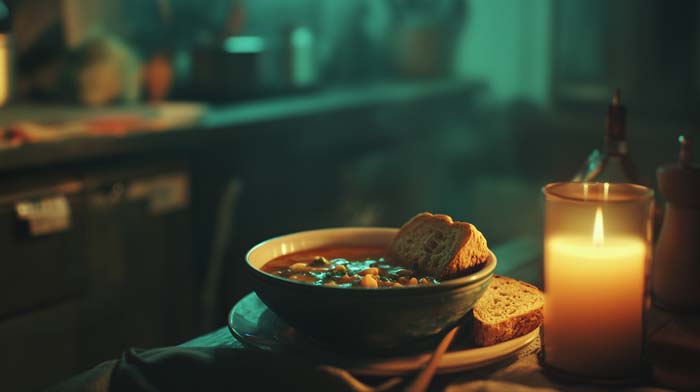





“Don’t judge me,” she said. “Your fries are my therapy.”
“No judgment,” Jason said, and meant it. But the truth was, he felt the whole town inside that simple interaction. Not suffering, not tragedy, just a quiet recalibration: people used to come with ease, now they were coming with strategy.
“How would you like to pay for that?” he asked. She handed over her card and paid, tipping like she always did, too much for her own good, and as she stood to leave she said, softly, “This place still matters, Jason. Don’t let it turn into… you know… one of those places.”
Jason nodded, throat tight. “I’m trying.”
“I know,” she said. “We all are.”
After close, Jason sat at a table with the lights dimmed, the restaurant empty. It still smelled like garlic, warm bread and fryer oil, the honest scent of a working kitchen. He opened his notebook and stared at the numbers. Everything coming into the restaurant cost more: ingredients, packaging, fuel, labor. Suppliers always had reasons, and the reasons were always somewhere else.
 He’d raised menu prices more often in the last year than he had in the previous ten. Every “fix” felt like a betrayal, cut quality, raise prices, shrink portions, swap ingredients, and find cheaper vendors. None of it solved the underlying problem, it just shifted the pain onto the people he cared about.
The bigger picture, when people stopped gathering, when the small places died, something deeper broke: their shared fabric.
By Friday afternoon, he’d had enough of, staring at menus and spreadsheets, like they were moral puzzles. He told his manager to cover the weekend. He packed a small bag, and drove ninety minutes to Ridgetown, a place he’d heard about; trees, quiet, and hopefully a little distance from the constant math. He told himself he was going for a rest, but really, he wanted to remember what “possible” felt like.
The town was small, a single Main Street, bright, calm, not sleepy, it was alive. The square had a farmers market, a bakery, you could smell the cinnamon and warmth, a hardware store with a chalkboard sign out front, a coffee shop with locals sitting on an old bench out front.
Jason ordered coffee and a pastry and slid his card forward.
The barista smiled. “You paying in Ridge?”
Jason blinked. “Paying in what?”
“Ridge,” she said, pointing to a sign by the register. A simple logo of rolling hills and a QR code. “Our local currency.”
Jason laughed, thinking it was a joke.
 “It’s optional,” she added, friendly. “Regular money still works. Ridge just gets you a better deal.”
“How much better?”
“Usually ten percent,” she said. “Sometimes more. Depends on where you spend.”
Jason stared at the sign again. “Why would you do that?”
The barista shrugged like it was a normal thing in her world. “Keeps it local.”
“Keeps what local?”
“Value,” she said. “Support. We like feeding our own town.”
Jason said “Why not” and downloaded the app, loaded a small amount, and paid in Ridge. Immediately the total on his bill dropped. The barista handed him his coffee like she’d just slipped him into a different kind of agreement.
Over the weekend, the difference wasn’t one big revelation. It was a hundred small surprises. The place felt… connected. Businesses didn’t feel like isolated islands. Food tasted fresher and more seasonal. Prices felt strangely reasonable. People seemed less harried, more rooted, like their attention wasn’t constantly being siphoned away.
Jason ate at a diner where the waitress called half the room by name. He knew how that felt. He bought honey at a local market vendor who talked about bees the way people talk about their grandchildren. He wandered into the hardware store and ended up in a ten-minute conversation about repairing porch steps with the owner. Everyone spoke with the calm confidence of someone who knows their work mattered. Everywhere he went, a little sign: Ridge Accepted Here. The underlying message, value stays local.
 On Sunday, he drove home with a jar of honey on the passenger seat and a new feeling in his heart, not a plan, not a pitch, just the sense that another possibility existed!
The next day, the app sent him a notification. Thanks for participating in the Ridgetown economy. Want to see your impact?
Jason tapped.
The dashboard that opened wasn’t flashy, it wasn’t gamified, it was clean, almost tender, because someone had finally made the invisible visible.
The first tab : Spending
Coffee shop → local roaster → regional delivery co-op
Diner → local eggs → nearby farm
Hardware store → regional supplier → local repair crews
Market honey → beekeeper → local land stewardship fund
Bakery → local mill → grain grown within forty miles
Jason nodded. It made sense, local loops, local supply chains.
The next tab: Commons
It showed the community commons feed, the less-linear, more human outcomes. A small percentage of every Ridge transaction flowed into a shared pool, quietly, automatically, not as charity, rather a design feature of the system. Operating as a dividend, their way of saying: when our region circulates value, it strengthens what’s often neglected.
Jason watched the lines populate:
Marketplace + bakery transactions → school lunch bridge fund (covers gaps when families are short)
Local restaurant network → farm-to-school purchasing (guarantees seasonal produce contracts)
Repair/hardware circulation → elder home-safety fixes (rails, ramps, winter sealing)
Coffee and café cluster → youth apprenticeship hours (after-school paid learning with local trades)
Regional delivery co-op → emergency pantry resupply (quiet replenishment, no crisis branding)
Jason sat back in his chair. His throat tightened, not from sadness, but from a new understanding.
This was money doing something he’d never imagine money could do: behave like a living system. Not just paying for things, but strengthening the whole. Not just transactions, but contributions made visible, value flowing down to kids eating lunch at school without having to carry shame or anxiety.
The final tab: Impact
 Three simple metrics:
Estimated local recirculation: 3.2 cycles
Estimated regional retention: 78%
Leakage to outside systems: -50%
Jason stared at the word leakage like it just explained his entire year.
Here, value leaked out constantly, into distant suppliers, distant systems, distant owners. The tighter things got, the more the town bled. Everyone felt it, but no one had language for it beyond “prices are crazy.”
In Ridgetown, someone had redesigned the plumbing, a currency, current see, a flow of value that wasn’t just money. It was a map of contributions, a mechanism for circulation. A way to keep the life blood moving through a place instead of being draining away.
Jason realized he’d been trying to solve a living problem; fragile supply chains, rising costs, fading regulars, with an abstract tool that didn’t care whether his community lived or died. He’d been trapped inside an old system; money as the highest value, money as the only lever, money as the only way to participate.
But what Ridgetown had done was quietly radical; They’d put money back in its rightful place, a tool, not the master. And they’d made the deeper source of value visible again: contribution to real needs. Food. Care. Repair. Stewardship. Learning. Local resilience.
The real economy wasn’t the abstract economy of numbers. It was the economy of a shared home, their region, their relationships, the flows that kept their lives going.
Jason recalled Deanna’s line, I’m being strategic. Realizing how quietly that word had entered everyone’s lives, whether they knew it or not! He saw, suddenly, that his restaurant wasn’t only selling meals. It was part of a regional metabolism. A node in a living network. If the network leaked too much, everything starved.
That afternoon, he called a few people he knew, not investors, not consultants. The farmer outside town who still grew tomatoes that tasted like summer. The woman who ran the community garden program. A friend who owned a small hardware shop. The head cook at the local school who always looked tired in a way Jason recognized. He invited them to breakfast before opening.
 They sat in the corner booth with coffee and eggs, the kind of simple meal that makes hard conversations feel possible. Jason didn’t pitch a miracle. He told the story: the weekend, the currency, the feeling in the town, and the dashboard; showing Spending recirculated, Commons built; lunches, apprenticeships, elders’ home repairs, and real Impact.
He watched their faces shift, skepticism loosening into curiosity.
“So the currency… funds things?” the school cook asked carefully.
“It routes value,” Jason said. “It makes local contributions visible. And it keeps the benefits close to home.”
The hardware owner frowned. “Sounds complicated.”
Jason nodded. “It is. But the current system is complicated too, it just hides the consequences. We pay for the complication with fragility, people falling through the cracks, the town slowly losing itself.”
The garden director leaned forward. “What would it look like here?”
Jason took a breath. “It starts with a different question,” he said. “Not ‘How do we survive?’ but ‘How do we help our town circulate support again?’”
He looked around at them, people who kept the town alive in ways that never made headlines. Then he asked the question that had changed his whole weekend:
“How would you like to pay for that?”
They stared at him, confused.
Jason laughed and continued, “What if people could earn local credits through contribution, real, practical, community-strengthening contribution, and spend it locally? Not as charity, not as pity, as participation.”
He gestured toward the school cook. “What if a few hours helping prep school lunch kits earned credits someone could use for dinner at my place, or supplies at his store, or produce from the farm?”
The school cook’s eyes widened. “People would do that,” she said, surprising herself. “Some folks would love that.”
The hardware owner chuckled. “You mean… help out and get fed, without it feeling like a handout.”
“Exactly,” Jason said. “It feels like belonging.”
The farmer leaned back, thoughtful. “And it keeps customers coming back,” he murmured. “Keeps the loop alive.”
Jason nodded. “More than that, people start to think about new local businesses that become part of the loop. It changes what we reward. Right now we reward extraction, scale, leakage and distance. What if we rewarded needs met? What if we rewarded the things that keep this place resilient?”
It wasn’t solved in that booth, nobody designed a new system on a napkin. But something changed anyway: the frame. Jason had spent a year asking: How do I charge more without losing people? Now he couldn’t stop hearing the deeper question humming underneath: When someone pays here, what are they nourishing?
A few days later Jason stood near the host stand as customers drifted in. The room wasn’t packed. Costs were still high. The old system hadn’t magically faded away, but he saw the place differently. He saw every meal as a relationship: soil to farmer, farmer to kitchen, kitchen to table, table to town. He saw value not as a number but as a flow: either it circulated and strengthened the place, or it leaked and weakened it.
Later that night, Deanna came in, this time with her friend Kelsey, both of them laughing at something on Kelsey’s phone because they’d decided they needed an evening of amusement. They took the window table. The room wasn’t packed, but it had the low hum Jason loved; forks, laughter, the soft sounds of people being together.
When Deanna paid, Jason handed her the receipt wrapped around a small card. Not a guilt trip, not a charity pitch, something that was an invitation to the town’s next chapter.
 TOWN TABLE NIGHT — Fridays, 5–7
Come early. Join a crew. Do one small thing that helps the town.
School lunch prep
Community garden harvest
Porch-fix team
Earn local credits. Eat together after. Music on.
Deanna read it once, then again, eyebrows lifting. “Wait, is this real?”
Jason leaned on the table edge, smiling. “Real. No awkward speeches. You show up, pick a crew, do an hour. We make it fun. You earn credits you can use here or around town when we get more places on board.”
Kelsey’s eyes lit up. “So…I can help pack lunch kits and then come back for tacos?”
Jason laughed. “Exactly. Contribution first, tacos after. A classic human design.”
Deanna shook her head, “Honestly? That sounds… kind of perfect.”
Jason nodded toward the kitchen. “It’s the same town, same people, same needs. We’re just trying to route value differently. Keep it here, make it visible.”
Deanna tapped the card against the table, thoughtful. “You know what I miss?” she said. “Feeling like I’m part of something. Not just… surviving my schedule.” She got a glint in her eyes. “How can my business be a part of it?”
Jason smiled, she got it, the exact insight the whole story had been building towards. Not money as the deepest value, but participation, belonging, contribution that strengthens their home.
“Let’s talk Friday” he said
“Friday!” Kelsey confirmed.
Deanna looked at Jason. “Friday,” she said, firm, bright, like a yes she actually meant. “And I’m calling dibs on the garden crew.”
Jason watched them walk out laughing, and for the first time in a long time, he didn’t feel trapped inside the old question of prices and margins.
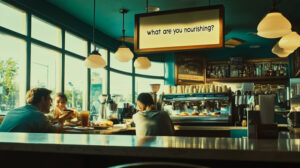 The question was still the same, “How would you like to pay for that?” What had changed was the answer..
Not just with dollars.
With participation.
With contribution.
With a currency that captures real value!