Listening to Hear
Our current financial system is a machine where the gatekeepers are those who have accumulated the wealth that keeps the machine running and the machine is failing! There is a different option if we're listening.


Are you being paid what you’re worth? This is a question that many people ask, and yet there is a deeper question most never ask. Is what you’re doing valuable, or more directly, is it needed? Because often the people who are being paid the most are not the ones doing the work most needed.
Some might find this jarring, mostly because we have been trained to believe the opposite. We are told that compensation reflects contribution, that markets sort talent with logical precision, and that the higher the pay, the greater the value delivered to society. Yet look at the world we have created. The work that keeps society running, people alive, and that affects daily life, caring, raising, cleaning, teaching, growing, repairing, maintaining, building, and supporting, is often treated as low-status, replaceable, and routinely underpaid. At the same time, many of the roles that garner the highest salaries are bound up in managerial layers, status games, institutional maintenance, complexity management, and the endless administrative bureaucracy that exists to justify its own existence!  The most obvious expression, the former is paid by the hour, easily cut when necessary, and the latter is given a recurring salary independent of what value is actually produced. What we see as unequal pay is not just a wage issue, the revelation? Our society has become deeply confused about The Nature of Work!
David Graeber’s Bullshit Jobs sharpens that revelation by naming something many people already feel and struggle to identify: a startling amount of modern work is performative. It exists because institutions need it to preserve appearances, justify their existence, maintain control and oversight, as bureaucracies expand, hierarchy requires attendants, status has to be visible, and because somebody higher up benefits from the complexity. Graeber’s distinction between “bullshit jobs” and “shitty jobs” captures it simply. The first are often well compensated, socially padded, convey privilege and develop hierarchies of underlings, many of whom privately suspect that what they contribute offers little or no value. Even worse, those at the top in these positions set the value for the very work they are doing. In contrast, the latter are often hard, low-paid, exhausting, yet indispensable. Furthermore, they have no voice in deciding what’s actually valuable. This split alone should force us to face the question of the story we tell about the nature of work and compensation. If pay really tracked social value, the work that society needs to function, how is it that the latter work is rewarded the least?



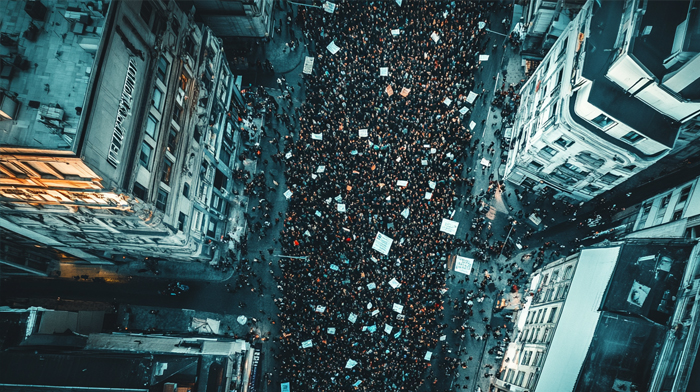





















This distortion is not accidental. It is built into a system shaped by financialization, bureaucracy, prestige hierarchies, professional gatekeeping, privilege protection, and institutional complexity. In this kind of world, compensation isn’t based on its usefulness but on its proximity to power. The closer a role sits to control, access, privilege, abstraction, rule-setting, or management of complexity, the more likely it is to be treated as important. The further a role sits down the chain; closer to bodies, places, messiness, maintenance, care, or actual material life, the more likely it is to be treated as ordinary, cheap, and invisible. We have created an economy that defends the machinery, where this defense is paid better than those sustaining the world the machinery is supposed to serve.
 This is why the nature of work cannot be understood as a dispute over fairness within an otherwise sane system. It asks a more dangerous question: what exactly are we rewarding? If a worker who helps keep people fed, clean, housed, taught, healed, or protected is paid less than someone whose primary role is to manage optics, internal politics, procedural layers, or financial abstractions, then the issue is not simply inequity. The system is a hierarchy as opposed to a web; it places a premium on work that honors the hierarchy inside institutions while discounting the work that flows, actually touching lives. To see this more clearly, we have to break down some of the false polarities around which we organize the conversation about work.
Take skill versus need. Highly skilled work is not the enemy. Some specialized labor is profoundly necessary. A surgeon who saves lives, a structural engineer who keeps bridges standing, or a technician who maintains life-supporting infrastructure all perform work that is both skilled and vital. However, skill alone does not justify social value. Other highly skilled work serves complexity for its own sake, or a class of insiders who benefit from the complexity, keeping the complexity opaque. A needs-based view of work does not ask only, “How difficult is this role?” It asks, “What human need does it meet? What form of life does it support? Does it help keep the social fabric alive?” More importantly,” Is the work an artifact of a dysfunctional system?” Yes, skill matters, but severed from need, it can become an elegant form of self-service, otherwise known as bureaucracy. In other words, when the cost to manage the activity is higher than the cost to deliver the activity, the system becomes self-serving.
Let’s further unpack specialty jobs versus necessary jobs. Specialization can be beautiful when it deepens a society’s ability to meet real needs with precision, care, and excellence. But specialization can also become its own justification, spinning out professions and sub-professions whose real function is to maintain dependency on those already inside the gate. Complexity can begin by serving life and end up serving itself. For example, when the Affordable Care Act was announced, President Obama said he only went so far, to go further would have eliminated 1.2 million jobs. The nature of those jobs? The health insurance system and jobs that are artifacts of a dysfunctional system. What if those people were actually shifted to providing health care? The legal system is another case. A society needs law. But our system is so complicated that ordinary people require expensive intermediaries, lawyers, to navigate even the most basic aspects of our legal landscape. The same could be said for our financial system. A line was crossed; our complex legal system is created by lawyers, understood by lawyers, and benefits lawyers. At this point, complexity is no longer merely solving problems; it’s manufacturing them, then charging admission to solve them.
Let’s return to the bullshit versus shitty jobs. Graeber’s brilliance refuses to confuse the two. A bullshit job may offer comfort, status, and good pay while providing questionable value and potentially leaving its holder morally injured, suspecting that none of what they do really matters. A shitty job, by contrast, may be physically hard, exhausting, and humbling, often underpaid while remaining absolutely essential. This is a moral paradox of our modern economy: the person cleaning the hospital, fixing the pipe, emptying the trash, or caring for the elderly contributes more directly to the continuity of the community than the person writing an internal report about some strategic review process framework or the manager who convenes endless reporting meetings, interrupting people from doing their “real” work. One is treated as low-value labor while the other is given prestige, salary, and institutional respectability. This is not an economic truth; it’s a cultural and structural lie.
The same paradox exists in blue-collar versus white-collar work. White-collar prestige often carries the presumption of intelligence, a ladder of advancement, and an aura of importance. Blue-collar work is still too often treated as lower, rougher, and less sophisticated. But that social ranking hides the more serious question of social value. What would happen if the financial analysts disappeared for a month? Would anyone notice? What would happen if the sanitation workers did? 
How fast would we notice? Which absence would show up faster in the world, on the streets, in our food, within shelter, impacting health, and in general, interrupting social continuity? The answer is obvious. It’s not an argument against thought work; it’s an argument against confusing abstraction with superiority. There is white-collar work that is useful, an architect who designs a home that is simple, inexpensive, durable, utilitarian and adaptable to various uses. However, much of it is buffered by prestige that hides how indirect its contribution really is. Much of blue-collar labor carries immediate social value while receiving neither the status nor compensation that it should warrant.
Underneath all of this lies the largest polarity of all: an extractive model versus a regenerative, sustainable model. In an extractive system, the aim is to capture, control, accumulate, and defend advantage. Work is valued according to how it supports expansion of the machine: profits, complexity, hierarchy, power, privilege, and insulation from consequence. In a regenerative system, work is valued according to how it nourishes the conditions of life: who teaches, feeds, shelters, and heals, what it repairs, maintains, restores, and reduces, how it strengthens trust, and builds shared resilience. One model asks how much I can get. The other asks how I can contribute. The latter keeps the living ecosystem viable over time. When we talk about unequal pay, it is so morally charged because it reveals which model is actually being served.
This helps explain why complexity so often becomes self-serving. Systems expand, layers accumulate, procedural and professional classes proliferate, and the people who design and manage the maze are rewarded for doing so. Complexity becomes a form of power. The more opaque the system, the more valuable the insider who can navigate it. The more indispensable the mediator appears, the more inaccessible it becomes for ordinary people to move through it. Life becomes impossible without institutional permission, interpretation, or administration. Graeber showed how bureaucracy and status competition feed this dynamic, creating work whose chief purpose is often to justify its own existence. Rules get created, then they must be monitored, violations detected, and corrective action applied. And when an exception occurs, another rule appears. These types of roles are often tethered to hierarchy; organizations pay them accordingly, reinforcing an illusion that their remuneration reflects necessity rather than positional advantage.
 John Driscoll and Morris Pearl, in Pay the People: Why Fair Pay Is Good For Business and Great For America, approach the problem from a different angle and reach a related truth: low wages are not merely cruel to workers; they are bad for economies. Underpaying the people whose work sustains everyday life weakens families, suppresses demand, destabilizes businesses, and hollows out the larger economy. Wages are more than a cost line to be minimized. They are the circulatory system of society, its lifeblood. When too many people are paid too little to live with stability, the whole society weakens. What looks like efficiency at the top shows up as fragility everywhere else.
It matters here because it clarifies that equal pay is not a sentimental plea to be nicer. It’s a structural argument about the kind of society that can remain coherent. If the labor to meet basic needs is persistently underfunded, then the very base of social life collapses. The people doing the most necessary work live in chronic insecurity. The wider economy loses buying power and stability. Institutions respond with more oversight, more reporting, more management, and more bureaucratic control. Underpayment does not just hurt workers; it breeds mistrust, hierarchy, and administrative bloat. Cheap labor, in the end, is more expensive than it looks.
However, the deepest point of this conversation is not economic; it’s human.
Christopher Sansone’s Longing: A Pilgrimage to Your Quiet Power Within offers a perspective for something many people feel at work, while at the same time are struggling to defend: their urge to do something that is meaningful. In the predominant culture, that urge is dismissed as laziness, immaturity, lack of grit or motivation, or simply dissatisfaction. But Sansone reframes longing as a signal rather than a defect. The feeling that one’s efforts have been severed from meaning is not just a private mood. It’s a deeper level of truth-telling. Human beings do not fundamentally long to spend their lives performing useless tasks, no matter how polished the office or how respectable the compensation. People want to know what they do matters. They want their efforts to touch people’s lives. They want to contribute in ways that are truthful, needed, and aligned with something deeper than hierarchy, performance, and control.
This is where the unequal pay conversation opens onto a larger landscape. The urge around work must be more than wanting more money. It’s about wanting one’s work and one’s livelihood to stop contradicting each other. A person may be well compensated while at the same time be hollowed out, knowing that their labor exists mainly to maintain appearances, follow some rule, or maintain some power structure. Another may be exhausted and underpaid yet retain a fierce sense of meaning because what they do plainly serves life. Longing, in this sense, becomes the diagnostic test. It reveals where the system has severed value from vitality, compensation from contribution, and prestige from truth.
We are living through a period in which this severing is harder to hide. People working 2 and 3 jobs, 80 hours a week, and still living on the edge of survival. The latest threat, your job being replaced by Artificial Intelligence. Call it a Fourth Turning, a reckoning, a revelation, whatever the name, the pressure is the same. The bloated top of the pyramid is losing trust and moral legitimacy. The base of society is reasserting itself. People are starting to see what is real, necessary, and contributory. What cannot be permanently treated as peripheral without the whole social structure becoming unstable? The question coming due is whether we are approaching a collapse of the pyramid itself: a world in which the labor that keeps society going moves from the margins and becomes a web of real value. This becomes the hopeful reframe of the nature of work.
 The nature of work does not mean a flat world in which every task is compensated identically regardless of context, skill, or responsibility. It means rethinking the purpose of compensation. It means asking whether wages should continue to reward status, gatekeeping, and bureaucratic theater, or whether they should increasingly align with real participation in meeting needs and sustaining life. It means recovering the idea that livelihood should not depend on climbing further into abstraction, nor surrendering dignity to the proximity of hierarchy and privilege.
In a needs-based economy, it is suggested that twenty hours of meaningful contribution per week should be enough to meet a person’s basic needs. That system would be calibrated differently. It would begin from the premise that the point of compensation is not to force people into chronic overwork just to earn stability. It would ask what level of contribution is sufficient to keep the system going, what level of support is sufficient to let a person live with dignity, continuity, and purpose. In that world, value would not be defined mainly by institutional power or bargaining leverage. It would be defined by whether the work helps feed, heal, teach, repair, clean, build, maintain, connect, restore, and strengthen the commons that make life possible.
 This is why the nature of work is not only about wages. It is about a deeper truth, whether we are willing to admit that the current system often pays the least for what matters the most, and pays the most for what most successfully protects the illusion. It is about whether we can rebuild the bond between contribution and livelihood, between dignity and work, between the human longing to matter and the social structures that decide what matters. The real question is, are we ready to see through the illusion and redefine the nature of work?